• Skip to main content

Weekly Fifty

Exploring the wonders of creation through a 50mm lens...and other lenses too.

  • Subscribe
  • YouTube
  • About

Backyard Bunny

August 9, 2017 12 Comments

Backyard Bunnyhttps://www.weeklyfifty.com/wp-content/uploads/2017/06/WeeklyFifty-2017-August-9-Backyard-Bunny.mp3

This was a tough one.

Not just a tricky photo to shoot, but a difficult decision in terms of which photo to post. I came away from this particular picture session, if you could call it that, with a couple dozen images that I narrowed down to two finalists. The other was a similar photo but with more of a profile view of the rabbit, and I thought both were pretty solid. In a break from tradition I honestly couldn’t figure out which one to post as this week’s featured Weekly Fifty image, so I posed the question to my Instagram followers and decided to let them choose:

View this post on Instagram

A post shared by Simon (@sringsmuth)

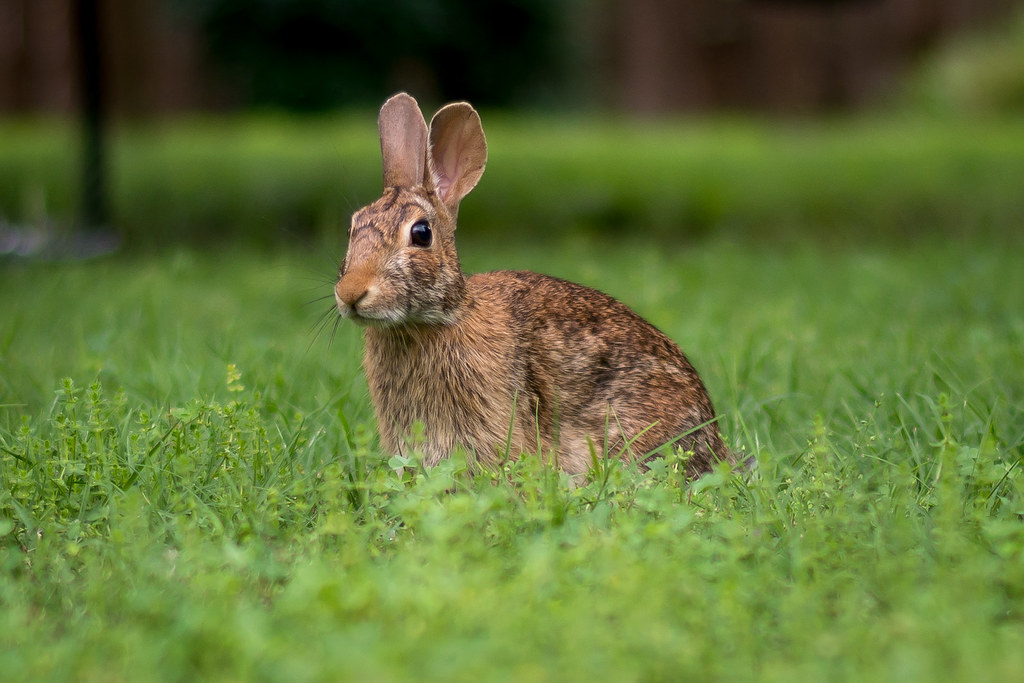
After one day of voting I tallied the results and this one was the winner, with the bottom picture coming in a close second. (The vote was six to five, so a close call to be sure.) I did take the advice of one of the commenters and crop in a bit more, which I think worked well and helped put a clear emphasis on the bunny as opposed to the surroundings.

This was one of those photos I certainly did not plan for, and was only able to get due to what I can only attribute to dumb luck and some (apparently) good-tasting weeds and grass in my back yard. My kids, my wife, and I were out in the back yard earlier this summer and as often happens there was a rabbit or two making a meal out of our lawn. The light was good and one of the rabbits didn’t seem to mind all the human activity, so I ran inside and came back with my D7100 and 50mm lens. The trouble with that setup is that it’s not exactly ideal for this type of picture since it requires the photographer to get close, very close, to his or her subject and when working with animals this can be a tricky bit of business.

I got down to a prone position and did a sort of army-crawl as I carefully approached the rabbit, who was well aware that he was being watched. Fortunately he seemed more interested in filling his tummy than running from a human with a big camera, though he did keep a careful eye on my activity and hopped out of the way when I started to get a bit too close for comfort. This crawl-shoot-hop-crawl again set of maneuvers continued for a few minutes while my wife and kids watched from the porch, all the while I was shooting at f/1.8 (to get as much depth of field as possible given the size and distance of my subject) and taking lots of shots hoping one would work out.

When I loaded the images into Lightroom I was a little disappointed initially because in every shot the rabbit was so very small in the frame:
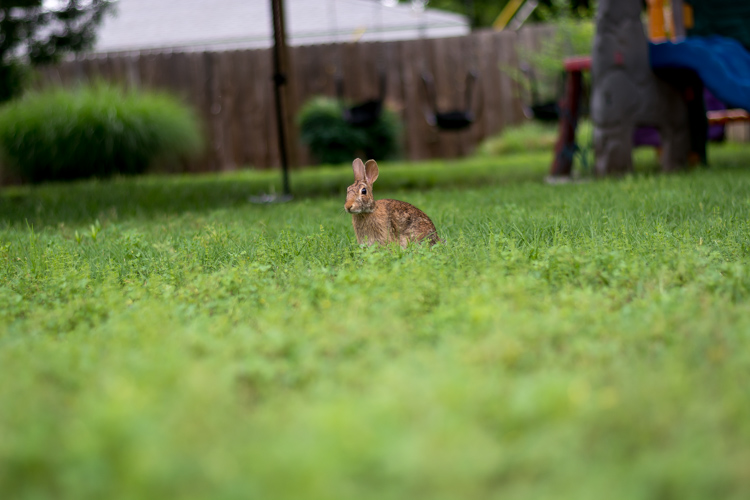
The un-cropped (and un-straightened) original image.

Not only that, but look at how busy the photo is! You’ve got a ton of grass in the foreground, a plastic play set on the right, a rope swing, some tire swings, a fence, and the list goes on. I thought the series of pictures was all for naught…until I started cropping. And this is where the magic of megapixels really starts to shine. Most cameras today clock in at around 16-24 megapixels, and my D7100 is right up there too. Thanks to the 24 megapixel sensor I was able to crop in really close to the rabbit and not really lose much in the process. It’s nearly a 1:1 crop, meaning there is almost no room left for cropping without actually enlarging the pixels, but even so the final image (which is about 2.5 megapixels, or about 10% the size of the original) appears to still have plenty of color, contrast, detail, and sharpness. There’s probably not enough data to mage a big print, like a wall-sized canvas, but for showing on screen or sharing on social media it’s just fine.

I’ve often been known to tell photographers to not be afraid of pushing their gear: shoot at high ISO values, search the camera menus for tweaks to try, and a little rain or snow probably won’t hurt things. I don’t often advise people to do extreme image cropping, but…well, I guess the proof, you could say, is in the pudding. Or if you’re Samwise Gamgee, the coney stew.
Read my educational photography articles at Digital Photography School

Signal

August 2, 2017 4 Comments

Signalhttps://www.weeklyfifty.com/wp-content/uploads/2017/06/WeeklyFifty-2017-August-2-Signal.mp3

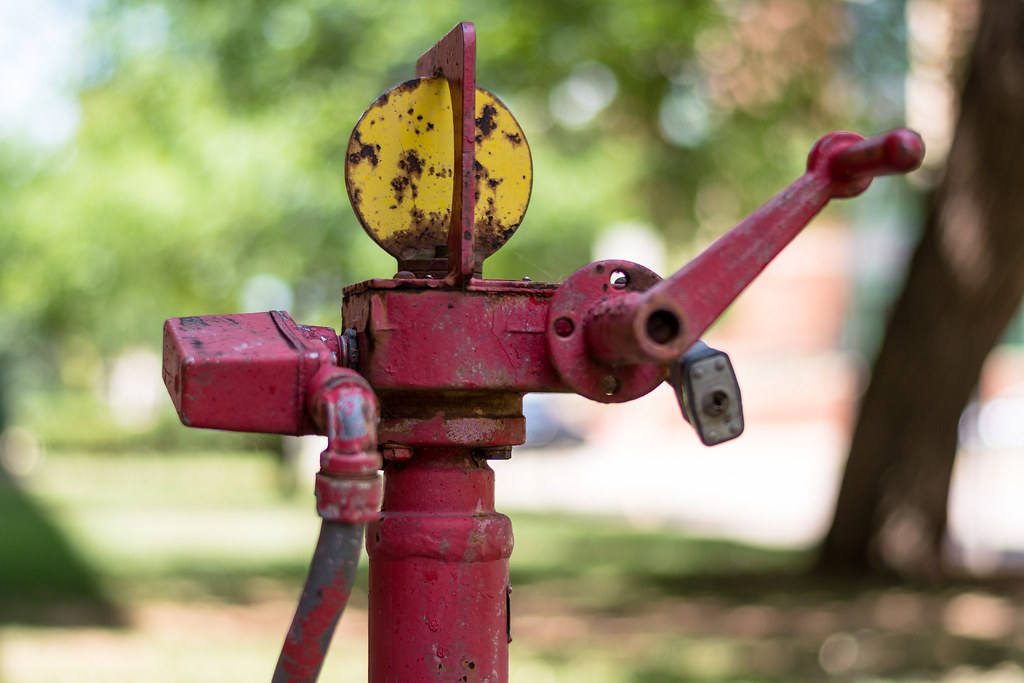
Normally when I post pictures of anything relating to nature, it’s with a disclaimer that I don’t know what it actually is that I’m looking it whether it’s a flower, tree, shrub, leaf, etc. Well, the same goes for this thing here in that I don’t really know what it is, but it reminds me of an old-time traffic signal hence the name I chose for it. I think it’s actually more a water spigot though I have no idea why the flap at the top is yellow. And it’s this clash of red and yellow that attracted me to the scene in the first place and made me pause to take a photo. I thought it was a fun and interesting object, so why not snap its picture?

There’s something else here too, which is the blurry background–or specifically the spots of light in the top-right corner of the frame. My brother Andy often shoots with a 50mm lens, and often wide open, such that it’s not uncommon for his pictures of friends, family, or just everyday objects to have a nice sense of separation between the subject and the background. One of the effects of using such wide apertures is that not only will the background get blurry, but spots of light will tend to get distorted and oval-shaped near the corners of the image. Andy’s pictures often display this effect and in my opinion it’s a nice, pleasing visual artifact that helps bring the viewer’s attention to the main subject of the picture. So when I photographed this…thing, I deliberately composed the shot such that the background would contain hundreds of little light points as the sunlight broke through the trees. The result was a swirling mass of blurry bokeh, and if you look in the top-right and bottom-right corners the balls of light are misshapen and look like little footballs.

(More information on this effect can be found here.)

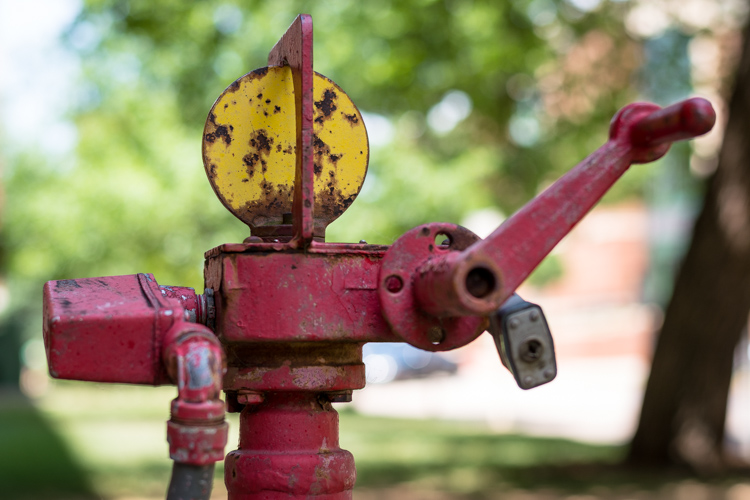
In order to get the desired cat-eye effect I had to shoot wide open at f/1.8, which meant that the rotating arm in the foreground ended up being more blurry than I would have liked as well as an overall lack of sharpness compared to the same image shot at f/2.8. But when I looked at the f/2.8 version it just didn’t have the same pleasing background effect as you can see here:

Sure the 2.8 version is sharper, but the background is much weaker as a result of the smaller aperture and it’s not a tradeoff I was willing to make when deciding which image to post for this week’s picture. It’s a fun technique to play with and if you’re looking for something to try with your camera then I’d recommend giving this a try, especially if you have a nice fast prime lens :)


Read my educational photography articles at Digital Photography School

Lily Forest

July 26, 2017 6 Comments

Lily Foresthttps://www.weeklyfifty.com/wp-content/uploads/2017/06/WeeklyFifty-2017-July-26-Lily-Forest.mp3

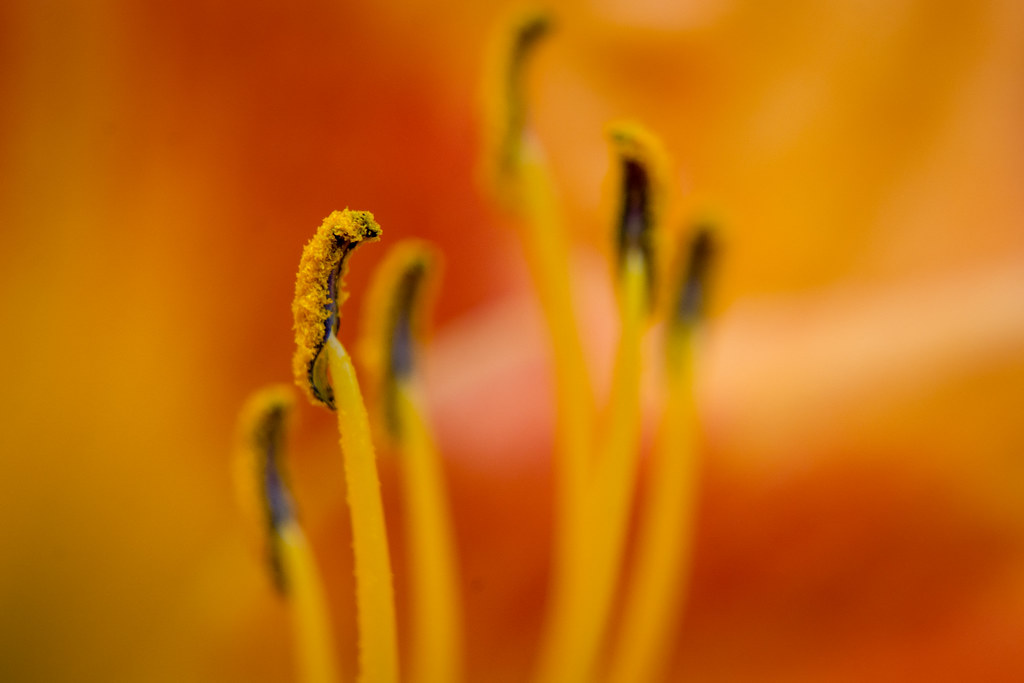
When I first got my close-up filters in the spring of 2016 I took photos like this all the time, eventually culminating in this one I posted here on the blog last July. It’s weird how I have this weird penchant for avoiding taking the types of photos that I simply enjoy taking, such as the one featured here this week. I like taking close-up photos of flowers, particularly lilies, because they’re filled with such rich and vibrant colors and striking details. The pattern usually goes like this:

  1. I get an idea for a certain photo, or type of photo, that I want to take
  2. I pursue that idea until I finally get the picture I was hoping for
  3. I abandon the idea and go try something else

That’s a terrible way to go about honing any skill! Practice is the best way to improve yourself, and it makes no sense at all to stop just because you think you’ve learned something. Why not keep practicing and improving? I don’t know what my hangup is with this when it comes to photography, but it needs to stop. So to that end I went out armed with my D7100, 50mm lens, and +10 filter specifically to get a close-up picture of a lily and I’ve promised myself that I will continue to take these kinds of pictures until the weather turns sour later this year. I can’t continue to grow as a photographer if I’m not willing to keep experimenting, and just because I got a picture that I like doesn’t mean there’s nothing left to learn.

As for this photo, I tried to use some of the things I learned last year when I would go out and shoot similar pictures. I like the colors in the Earnest photo from last year but I prefer the composition of this one. (See? I’m learning…) I shot this at f/6.7 so I could get the subject sharp but still have a shallow depth of field, though to be honest I probably should have used f/8 since the anther in the foreground isn’t quite as sharp as I would have liked. I tried to pick just one of the anthers as the focal point and have the others in the background, which makes the shot more visually compelling than having several things all vying for the viewer’s attention. And even though is one is more uniform in terms of its overall color palette, I think it makes for a less confusing and more subdued shot overall.

The one thing I’m not too happy with in this picture is its overall sharpness, which is almost entirely due to the shallow depth of field. If you click on the image and zoom in to 100% you’ll notice that the anther in the foreground isn’t quite as sharp as it could be, but that’s mostly just photographic nitpicking on my part and probably not something most people would notice. So instead of missing the flower for the anthers, I’m just going to enjoy the picture for what it is and continue to go out and take similar shots and see what happens.

Read my educational photography articles at Digital Photography School

Daily Driver

July 19, 2017 10 Comments

Daily Driverhttps://www.weeklyfifty.com/wp-content/uploads/2017/05/WeeklyFifty-2017-July-19-Daily-Driver.mp3

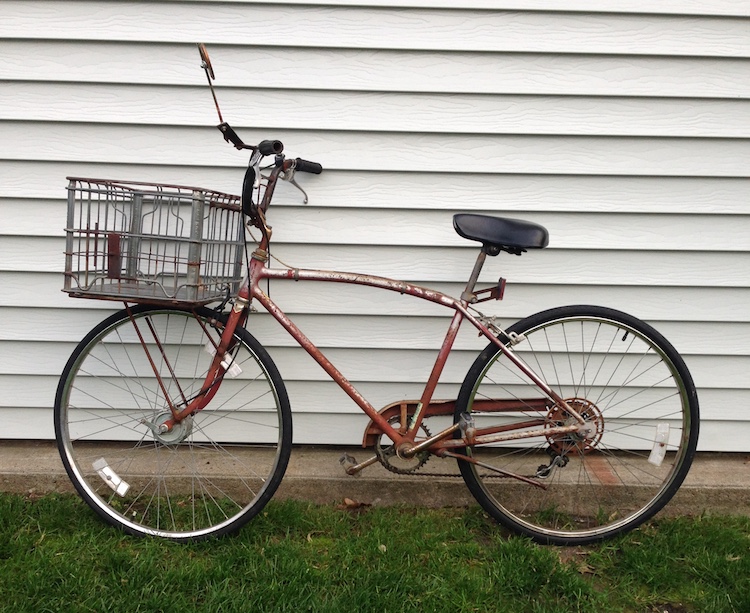
There’s a bit of a story behind this photo, and it all starts with my dad. When I was a kid my family lived in the northeast corner of Lincoln, Nebraska, and for a while we only had one car for the seven of us–mom, dad, and five kids. Fortunately we were close enough to the railroad where my dad worked that he would just ride his bicycle to get there and back. Every day, no matter the weather, my dad would leave the house early in the morning and ride down the sidewalk with his lunchbox sitting in a metal basket that he welded to the front of his handlebars. My whole life I can only recall one or two instances in which he took the car to work, partly because he wanted to make sure my mom had transportation for herself and the five of us but mostly because he saw riding his bike as a more practical solution when he only lived about a mile away from his job.

That mindset of practicality stuck with me over the years, and when I turned 10 and got an afternoon paper route I could be seen riding up and down the streets of our neighborhood slinging copies of The Lincoln Journal into driveways and porches of people whose last names I can still recall. Shortly after I turned 15 the Lincoln Journal merged with the morning Lincoln Star, which put afternoon carriers like myself out of work and scouring local businesses for any that needed able bodies to do whatever labor they required. The same week I stopped delivering the paper I got a job bagging groceries at the Food-4-Less down the road from my house and, following in my dad’s tire tracks, I rode my bike to work and back every day rain or shine.

My dad’s bike. He rode it to work for years and now uses it to run errands at the grocery store, and to Ace Hardware where he knows all the employees by name.

By the time I graduated high school I still didn’t have a car, preferring instead to pedal my bike anywhere in town that I needed to go, though in my college years I soon succumbed to the allure of driving instead of cycling and for a while my bike languished outside the house my buddies and I rented while we earned our degrees at UNL. I still worked at the same grocery store and even occasionally rode my bike, but living farther away made it a little less practical though no less doable had I simply possessed the sense to leave my house a few minutes earlier. That’s college life for you, I guess :)

When I lived in Minnesota for five years after graduating I didn’t even have a bike. My dad, meanwhile, kept on pedaling to work and back until the day he retired.

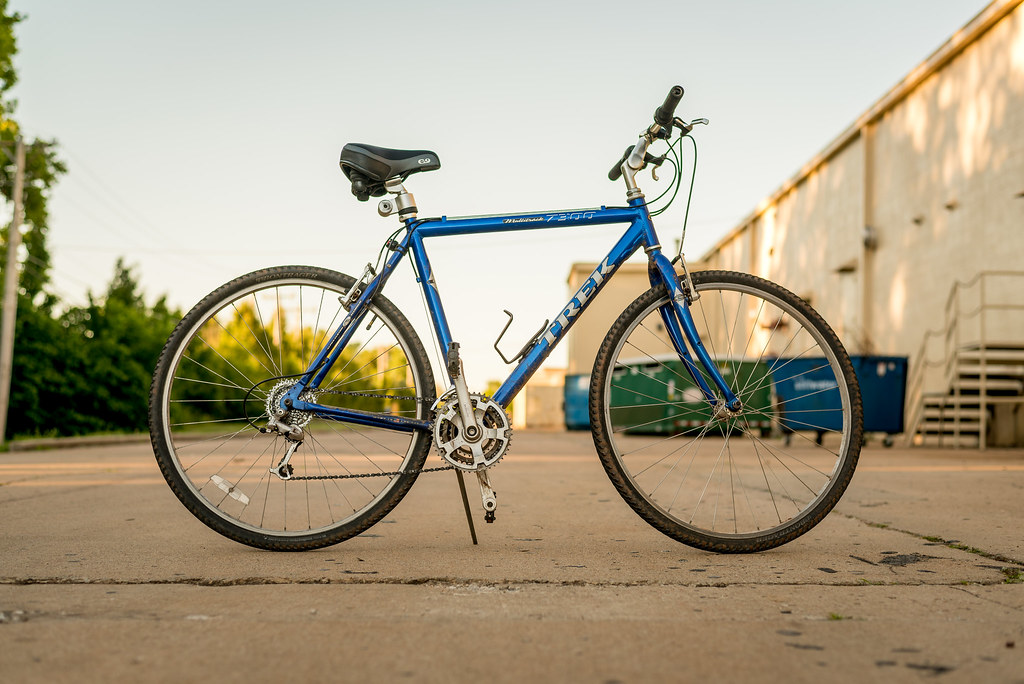
Shortly after moving to Oklahoma my wife came across this blue Trek bike, the one featured as this week’s photo, at garage sale. It was almost brand new save for the seat which was in need of replacing, and my guess is that it belonged to a college student who, much like myself when I was that age, would have rather driven around instead of pedaling a two-wheeler. It was, I’ve told myself over the years, most likely a Christmas or Birthday present that got used a couple of times and then sat parked outside and unused. The seller was asking $10 and my wife eagerly snapped it up, and after spending $20 on a new seat I now had a new bike to ride around town. We only had one car at the time so, out of necessity, I started riding it to work just like my dad always did. My commute was about 2.5 miles and I found that I rather enjoyed it, as it gave me a few minutes of peace and calm right as the sun was rising and the world was coming to life each morning.

Now here we are, over seven years later, and I’m still pedaling the same blue bike to work almost every day. In fact, biking has become a pretty big part of our family life with weekly 10-mile rides around the lake where my wife and I tow our boys in trailers, as well as frequent family bike rides around the neighborhood just for fun. As far as using a two-wheeler for a commuting vehicle, I don’t have quite the same level of atmospheric fortitude as my father and prefer to drive if the weather is really bad, but pick any given weekday morning and chances are I’ll be riding my bike to work. Inspired by the pictures that Tyler Seims, the manager of our local bike shop here in town, takes with his Fuji camera I thought I’d try to get something similar with my blue bike. So while I was on my way to work one morning this summer I hopped off my bike while taking my usual shortcut behind a strip mall and shot this picture with my D750 + 50mm lens just as the sun was rising. It’s not the most glamorous location, nor is it the best-looking bike in town, but over the years it’s become a big part of who I am. So Dad, if you’re reading this, thanks for setting a good example. Who knows, maybe one day your grandsons will end up riding their bikes to work too :)

Read my educational photography articles at Digital Photography School

Turtle

July 12, 2017 3 Comments

Turtlehttps://www.weeklyfifty.com/wp-content/uploads/2017/05/WeeklyFifty-2017-July-12-Turtle.mp3

I think the universe is trying to tell me something here.

After last week’s post regarding the shooting of wildlife pictures with a 50mm lens, here we are once again with yet another animal captured on (digital) film with naught but a 50mm lens stuck to a crop-sensor camera. A simple but effective setup, to be sure, and one whose capabilities continue to surprise me even though it’s something I shoot with almost every day. Note to Ryan, once again: You did indeed tell me so :)

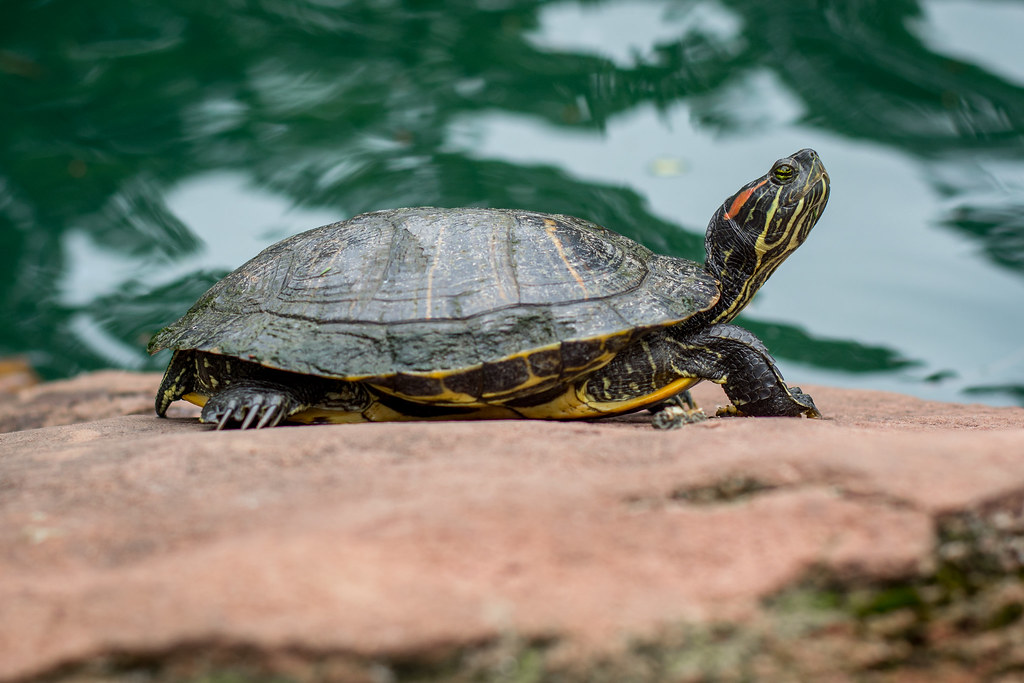
As I often do, I was out for a short walk around Theta Pond one day this Spring after school had let out for the summer, and was a bit surprised to see a cluster of turtles sunning themselves on a rock. Seeing just a single turtle isn’t a big deal over at Theta Pond, but four or five together doesn’t happen all that often, so I walked over to get a picture…and they all slid right into the pond in the blink of an eye. Major bummer.

A few yards away there was another rock with some more turtles on it, so I changed tactics and, using the patience I often talk about here on Weekly Fifty but continually forget to have when it really matters, I veeeeery slooooly crept towards the group of amphibians while warily wielding my camera. I moved a few inches at a time and looked not at the turtles but out towards the pond, and much to my dismay they began to disperse one by one until there were just two left. And then soon after that just one.

Nevertheless I continued my slow walk over to the rock, which at this point was almost a crawl, and started snapping pictures of the lone turtle that remained. I fired off five or six shots, then crept closer, and got a couple more. And then more, and then more, until I was probably just a few feet away at which point I frantically began changing from f/1.8 to f/2.8 and even f/4 in order to make sure I got at least one good shot. I kept the focus locked on his eye and used the motor drive to get several dozen shots, hoping I would walk away with something I liked. After a minute of this I got up, said “Thank you for letting me take your picture,” and turned to walk back to my office.

Later on as I was going through the photos I saw that most of them were in focus and tack sharp, which meant I could then shift my attention to the background in order to find one I really liked. I found several where the turtle’s face was pointed slightly away, or where it blended in too much with the water behind it, but eventually found the image you see here where everything seemed to come together really nicely. The turtle’s face is silhouetted against a patch of sky reflected in the water, and the shimmering reflections of light coming through a grove of cypress trees made the darker portions of the water almost seem to sparkle. Depth of field here is just a tad shallow as the foreground of the shell is slightly blurry, but this was shot at f/2.8 and when I stopped down to f/4 I realized the benefits in foreground detail meant a tradeoff in background blur that I didn’t like.

Though turtles are often depicted as slow and ambling, I have often been surprised at just how quickly they can move if the need arises. It was because of this that I was so pleased to get this photo and it has once again shown me that a 50mm lens works just fine for wildlife photography, provided you use a bit of patience, planning, and a bit of preparation so you know how to get the shots you are going for.

Read my educational photography articles at Digital Photography School

  • « Go to Previous Page
  • Page 1
  • Interim pages omitted …
  • Page 89
  • Page 90
  • Page 91
  • Page 92
  • Page 93
  • Interim pages omitted …
  • Page 138
  • Go to Next Page »

Copyright © 2026 Creative Commons License
This work is licensed under a Creative Commons Attribution-NonCommercial-NoDerivs 3.0 Unported License.