• Skip to main content

Weekly Fifty

Exploring the wonders of creation through a 50mm lens...and other lenses too.

  • Subscribe
  • YouTube
  • About

Simon

Chrysalis

September 14, 2016 2 Comments

Chrysalishttps://www.weeklyfifty.com/wp-content/uploads/2016/09/WeeklyFifty2016September14Chrysalis.mp3

Some of you might look at this shot and think I’m cheating or treading trodden trails here, but I promise that’s not my intention. What you are looking at is, yet again, a picture of a magnolia flower just like I shared a few weeks ago (and a few times over the years before that). Could I find something else to shoot? Sure. Have I? Definitely. So why do I continue to return to this specific type of flower? Mostly because it’s so fascinating, such a unique arboreal artifact to look at, and so much fun to photograph.

This is, of course, another image made with my close-up filters (if you’ve missed the past few weeks worth of posts you might want to scroll down and check them out) as you can probably tell already. It’s great fun having these filters now as these magnolia seed pods start to mature, as previously the closest I could get to them when taking pictures was about a foot and a half. It worked, and 24 megapixels allows me to get a little closer when cropping, but it’s not the same at all as being mere inches from the subject. In early August I posted a few pictures of similar seed pods in far earlier stages of maturity when you could see these curly little tendrils sticking up from the base of the flower (sorry for my lack of technical knowledge here. As Bones would say, I’m an educational technologist, not a botanist) and it was fun to revisit them much later in life as the seed pods were starting to balloon out.

Soon these pods will wither and die, and from them will appear a host of tiny red seeds that will be scattered, eaten, trampled, or maybe even planted in fertile ground and eventually give way to tiny little magnolia trees. And maybe that’s why I like taking these images repeatedly over the years: it’s a way to remind myself of the circle of life (cue Lion King theme) and document it one picture at a time.

Read my educational photography articles at Digital Photography School

Drenching

September 7, 2016 7 Comments

Drenchinghttps://www.weeklyfifty.com/wp-content/uploads/2016/09/WeeklyFifty2016September7Drenching.mp3

If I’ve said it once I’ve said it a hundred times: overcast rainy days are ideal for photography, and this was shown to be true yet again the morning I took this picture. (Though I suppose you could make the argument that, given your unique style of photography, any number of other weather conditions would suit you better…but for me a an overcast and/or rainy day is the bee’s knees.) Couple the weather with a macro setup, whether true macro lens or close-up filter, and you’re good to go. That’s what happened here anyway, and what you are seeing is yet another attempt to capture the ever-elusive drop-on-a-leaf picture I have been striving for ever since I got my close-up filters. As often happens I was not seeking this specific image in particular, but happened to come across this scene as I was out with my camera one rainy morning and could hardly go on without at least attempting a shot. And I’m sure glad I did.

Though I have made a few images like this before, what I found unique to this particular setup is the fact that the big drop in the center is not really the focus of attention. Rather, it is the small image of what is being reflected in the drop that I wanted to try to highlight and all in all I think it worked out fairly well. You can’t really tell from the small image preview here but if you click through to the full-sized image on Flickr you will see that the bright white streak on the lower-left portion of the drop in the center is actually a reflection of the sky above, and what looks like the webbings on a leaf is actually the pattern created by tree limbs high above as they stretch across the clouds. This was an intentional choice on my part, and I spent a few minutes carefully focusing not really on the big drop of water but in such a way so as to get the reflection to be tack sharp.

I used my D7100 + 50mm combo to get this shot (f/8, 1/250 second, ISO 140), and screwed a +10 filter on to the end, and what I’m learning after using this setup over the past few months is just how enjoyable it is even though it’s not technically a true macro rig. I don’t have an actual macro lens, and a few filters are kind of a poor approximation of what’s required to get real high quality close-up images, but at the end of the day I’m having so much fun taking these types of shots that I just don’t care :) Whether you’re posting cell phone shots to Instagram or making fine art prints for galleries, the point is to get out there and shoot the photos you want and hopefully enjoy yourself in the process.

Read my educational photography articles at Digital Photography School

Peeking

August 31, 2016 13 Comments

Peekinghttps://www.weeklyfifty.com/wp-content/uploads/2016/08/WeeklyFifty2016August31Peeking.mp3

So…you know how last week I wrote about how going down to the pond to take photos of ducks and other waterfowl was almost like cheating? Well, here we go again! This is a squirrel right near Theta Pond on campus, and just like last week part of me feels like this picture shouldn’t even count because shots like this are almost too easy to get. My coworker and I went for a walk around the pond and she spotted this fella munching on some kind of nut or acorn, and as usual I had my camera with me which was, thankfully, my D7100 and not my D750 so I had the advantage of a little extra reach with the crop sensor. Squirrels near the pond are so used to people that they barely bat an eye when you walk past them which makes images like this seem almost a bit unfair because it’s not like this required hours of waiting or any real work whatsoever. But still, just like last week’s picture of a duck, I rather like this picture even if it is somewhat derivative. It was fun to take and I like the way it’s composed, so I’m posting it here because I can :)

I shot this at f/1.8 which regular readers know is something I generally avoid, but since I knew I wouldn’t be able to get super duper close to the squirrel I wanted to make the most out of whatever I had and try to get a shallow depth of field if at all possible. Even though the resulting image isn’t as zoom-in-to-a-hundred-percent tack-sharp as I would like, using the wide aperture gave me the bokelicious background I was going for and helped focus the viewer right on the eyes and face of the squirrel.

One weird thing happened as I was taking this photo, which I hope is not an indicator of a larger problem that might be down the road: my lens refused to autofocus, at least at first. I tried a few different options on the camera and checked that the lens was in M/A mode, but nothing worked. I was getting a little antsy because I thought this squirrel might hightail it outta there and I was in danger of missing what might be a really nice photo, so I quickly took a few shots while focusing manually. Then I took the lens off, put it back on, and everything worked just fine at which point I got the shot you see here. Much to my surprise though, the manually-focused images actually looked decent. Not great, but not bad either, and if I would have shot at f/2.8 or f/4 they probably would have been just fine. The takeaway for me was that I need to take a cue from the US Coast Guard: semper paratus. Always be prepared. If I had taken the time to double check my gear I would have fixed the problem before it even became a problem. Thankfully all’s well that ends well and I’m treating this as a lesson in what to make sure I do the next time :)

Read my educational photography articles at Digital Photography School

Duck Hunting

August 24, 2016 7 Comments

Duck Huntinghttps://www.weeklyfifty.com/wp-content/uploads/2016/08/WeeklyFifty2016August24DuckHunting.mp3

I used to teach English at Meadow Creek Christian School (now called Legacy Christian Academy) in Andover, Minnesota, and one thing I stressed to my students who were struggling with narrative-style writing is to start by simply writing what they know. Using our own lives as a backdrop for writing stories, whether fiction or nonfiction, is a fantastic way to help bring out our inner authors. Tolkien used his experiences in World War I as the backdrop for the conflicts in his Lord of the Rings tales. Michael Crichton imparted his extensive knowledge of science and medicine into his many books, movies, and television shows which he had a hand in creating. Even John Grisham, purveyor of many of the most popular legal thrillers today, began his career as an author only after practicing law for ten years and then used that as the basis for his creative works.

What I’m getting at here is that sometimes it’s good to branch out into new and unexplored territories, but sometimes it’s nice to stick with what you know. There’s nothing wrong with treading in familiar waters—how often did you see Bob Ross do cubist-style paintings or try his hand at marble sculptures? And that’s what’s happening in this picture of a relatively normal white duck. There’s a small pond on the OSU campus that is a favorite spot for me and many of our students and faculty, and even though it’s somewhat cliché to wander down there and take photos of the animals…well, who cares? I still like doing it. It’s not groundbreaking or earth-shattering, but pictures of the geese and ducks are fun and can often be challenging too, especially when shooting with a 50mm lens because the animals, despite their familiarity with humans, still like to keep a healthy distance.

On this particular afternoon my friend Gina had brought some duck food along while we went on a short walk around the pond (apparently the stuff is super cheap! She bought 40 pounds of it from a local farm supply store for about $7) and it was fun to see the waterfowl overcome their trepidation and get very up close and personal with us while we fed them. I had my D750 with me so I used the opportunity to take some pictures, and you know what? I like this one and don’t even care that there are probably ten thousand others just like it. Taking this picture made me smile and it’s a fun little reminder of how there is nothing wrong with just doing what works.

Read my educational photography articles at Digital Photography School

Færie

August 17, 2016 8 Comments

Færiehttps://www.weeklyfifty.com/wp-content/uploads/2016/08/WeeklyFifty2016August10Faerie.mp3

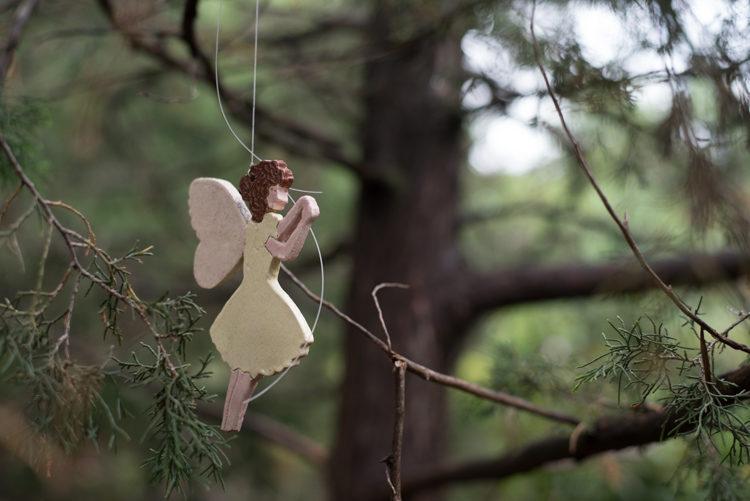
This photo honestly took me by surprise just a little bit. On a warm Sunday afternoon in July my wife and I were at the local botanic gardens with our two boys and as they played with one of the exhibits (some kind of hand-operated water pump connected to a trough and an underground storage tank) and we wandered around talking while looking at the local flora. It was one of those lazy, relaxing kind of days where there is no real agenda other than to get out and enjoy nature and we wanted to take advantage before it got too sunny. Soon our boys migrated to a spot within a grove of trees containing a few interactive art pieces to play with, so we went with and played along while snapping a couple pictures just for the fun of it.

As we were getting ready to head back to the car I spotted this tiny winged woodland lady frolicking among the branches, and crept in close to get a better look. She was kind enough to hover silently while I drew near with my D750 + 50mm lens, and turned a few pirouettes while I snapped some pictures. I didn’t want to disturb her lest she cry out for Oberon or Puck to come to her rescue but I did linger long enough get about a dozen photos before retreating to the outside world. Her slow twirling made it somewhat difficult to get the images I was looking for, and what I ended up with is actually not at all what I intended at the outset. I thought it would be fun to get a picture of her on the left side of the frame while also angled slightly so as to possibly show a bit of movement, and while I did in fact get that picture I did not really like it much:

\DFF_7061

Looking at the photos in Lightroom I realized that her slightly skewed composure made her look strangely distorted, and the extrusion of this two-dimensional shape in order to add depth only served to make such a picture look strange and even a bit disconcerting. I had about a dozen images just like this one but fortunately I also managed to capture one–and only one–of this little lady directly from the side which is what I ended up using as this week’s featured photo. I shot it at f/4 which, thanks to my full-frame camera, gave me the equivalent depth of field as if I had shot this at f/2.8 on a crop sensor camera and resulted in a very pleasing composition overall.

I thought it was cool to see this little scene in the gardens on that day, and it made me think of how we often decorate Christmas trees with similar trinkets and tchotchkes but put them away once the season passes. Why do we do that? Why not add a bit of life and inspire a sense of wonder in the world around us by adding special charms like this to our yards during the rest of the year? It seems like a fun activity to do, and I think I’m going to try to get on this with my own kiddos and find ways of adding a little extra spark of life to the natural world outside our house and the world around us.

Read my educational photography articles at Digital Photography School

  • « Go to Previous Page
  • Page 1
  • Interim pages omitted …
  • Page 108
  • Page 109
  • Page 110
  • Page 111
  • Page 112
  • Interim pages omitted …
  • Page 147
  • Go to Next Page »

Copyright © 2026 Creative Commons License
This work is licensed under a Creative Commons Attribution-NonCommercial-NoDerivs 3.0 Unported License.