• Skip to main content

Weekly Fifty

Exploring the wonders of creation through a 50mm lens...and other lenses too.

  • Subscribe
  • YouTube
  • About

Delight

March 23, 2016 19 Comments

Delighthttps://www.weeklyfifty.com/wp-content/uploads/2016/03/WeeklyFifty2016March23Delight.mp3

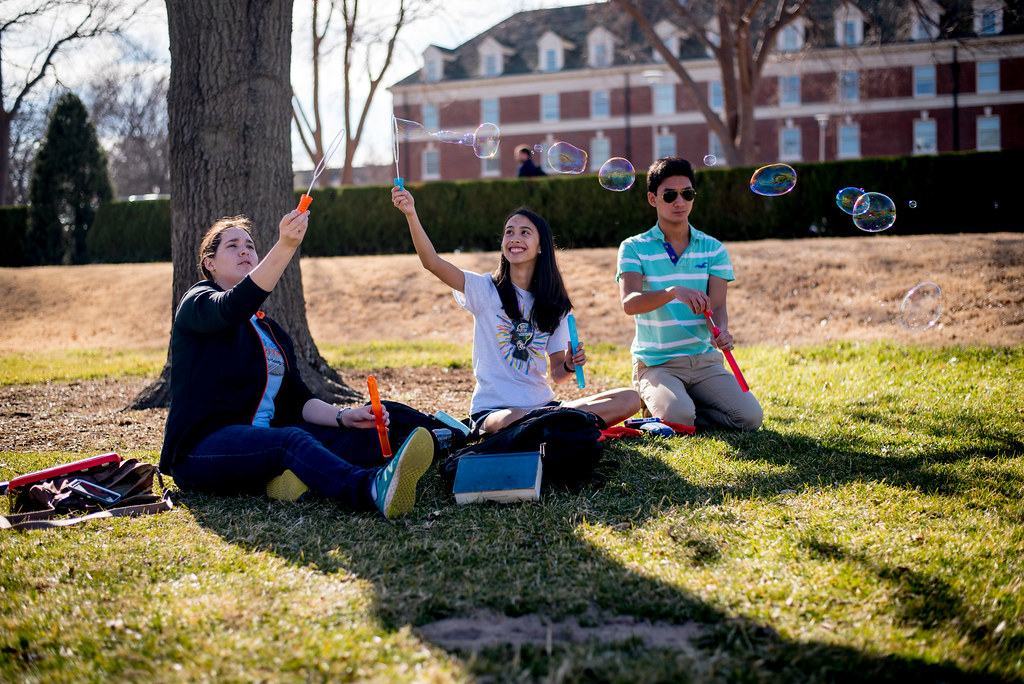
I’ve said it before and I’ll say it again, I really like working on a college campus. While most days are fairly ho-hum, there’s always the chance that you will run across an interesting photographic opportunity if you have your eyes open and your camera handy. When I took this photo I just happened to be walking across campus on an errand and had my camera handy, and I came across this trio of students enjoying the nice mid-February weather in a way that I don’t think I would ever see in corporate America. Something about this scene struck me as uniquely post-secondary: books, backpacks, bubbles, and a fierce refusal to care what anyone else might think. I walked past these students initially and then thought to myself “Why don’t I go take their picture?”

The answer to that question was the same as it usually is, and involved silly excuses like “What if they don’t want me to?” “What if they think I’m some kind of creepy weirdo?” “What if I don’t know how to frame the shot and I get a bad picture?” Fortunately my curiosity got the best of me and I turned around, walked back to where they were sitting, and asked if I could take their picture. They seemed to be flattered and I told them that blowing bubbles on a sunny day is something my kids like but I don’t usually see older people doing and that seemed to help erase any tension they might have had. Honestly my first priority was to just put these students at ease and let them know that I had no ill intentions (not that they had any cause to believe so in the first place, but still…) and then snap a few pictures. A lot was racing through my head as I crouched down and fired off a few shots such as:

• What should I focus on?
• What f/stop should I use to get the right depth of field?
• How should I frame these students to get a good shot?
• Where should I shoot from to make the best use of available light?

I didn’t have time to really ponder and explore these issues, but I think over the years I’ve built up enough instincts to get a few things correct right off the bat. The girl in the middle seemed to be really getting into the moment so I knew I wanted her sharp and in focus, and I shot with an aperture of f/2.4 which in hindsight was probably a bit overkill. It did give me a nice depth of field so the subjects are clearly pulled out from the background, making it easier to draw the viewer’s attention to them. But honestly my main goal wasn’t technical in nature but more compositional. I wanted a way to really capture the joy and delight of these students, and seeing the gleeful smile on the girl’s face as she watches bubbles float away from her wand does precisely that.

I’m very happy with the micro-composition elements of this picture too. The bubbles stream across the frame but do not overlap with the male student or the passer-by in the background. The girl on the left is framed nicely within the tree. And even though the horizon line cuts right through the head of my main subject (something I try to avoid whenever possible) the tradeoff was, in my mind, well worth it.

I took about eight or nine pictures, thanked the students, and went on my way not sure if I got anything useful at all. Even though I did get what I think is a good picture, at the time I didn’t even care since I just enjoyed seeing a very tangible reminder that there is always warmth following winter and light after dark, and no one should ever keep us from celebrating it.
Read my educational photography articles at Digital Photography School

First Signs of Spring

March 16, 2016 10 Comments

First Signs of Springhttps://www.weeklyfifty.com/wp-content/uploads/2016/03/WeeklyFifty2016March16FirstSignsOfSpring.mp3

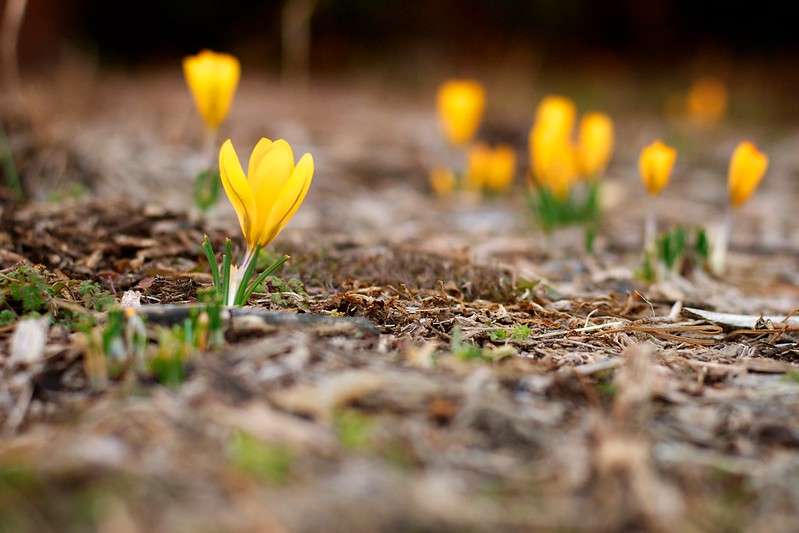
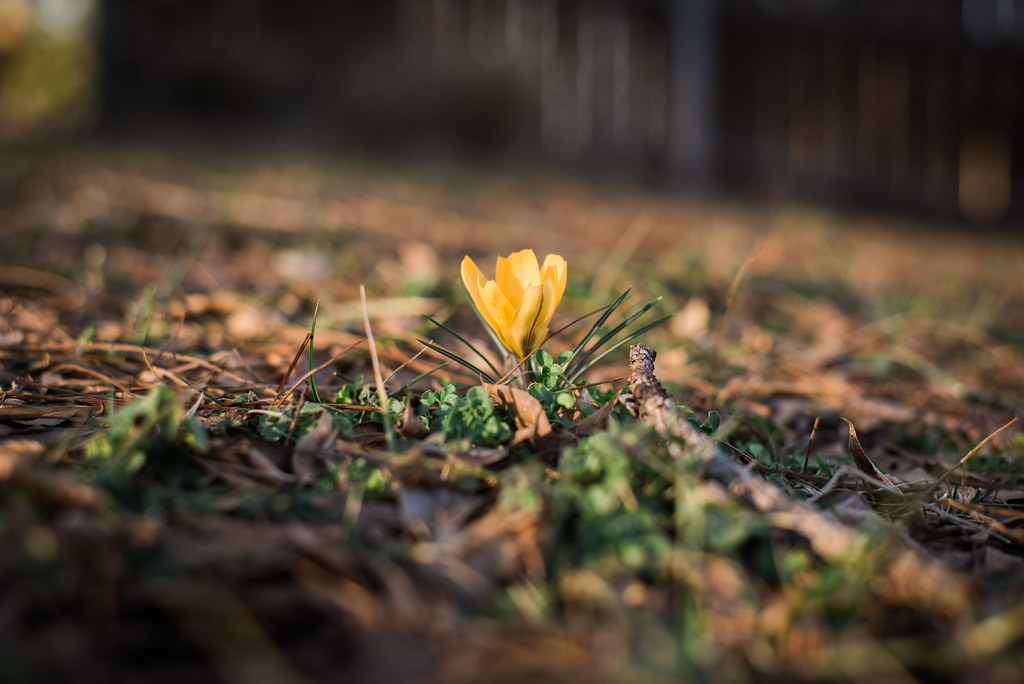
If this picture seems a bit familiar to you, it’s probably because you might have seen similar photos here on Weekly Fifty around this time of year. However, just like last week’s image this is more about process than product, and what it represents to me is more important than the picture itself. One of the best things about using a camera is that it forces you to see the world around you in a bit of a different light. If I have my camera on me, preferably in my hand or around my neck (yay Black Rapid!) I’m constantly looking at things a bit closer, or from a different perspective, or just stopping to take in the world around me when I would otherwise just be walking on by. Case in point: the image you see here. One of the best parts of spring is the tangible ways in which you can see the world reawakening and coming to life after winter, even a relatively mild one like we have had this year in Oklahoma. Dry tree branches, brown patches of grass, and dirt-laden flowerbeds slowly turn to color as the world shifts from grey to green, and looking at all this through the lens of a camera really can be quite fascinating.

Almost every year one of the first signs that spring is on its way is the appearance of crocuses in our yard, and I happened to see this one when I was outside playing with my kids on an afternoon in mid February. I don’t even remember what the three of us were doing but I think my wife was working on revising an article to submit for publication so I took the boys out to…who knows. Does it even matter? We were outdoors probably playing hide and seek, digging up the front yard, maybe climbing trees, or some other such activity that is not all that conducive to the chilly months of winter. My oldest son saw this flower and asked if he could pick it, and I said yes but asked him to hold off just a few seconds while I snapped a picture. You can’t tell from the image but he is literally standing just a few feet away right out of the frame waiting for daddy to finish messing around with the camera, after which he and my other son came right over and investigated this little yellow slice of nature a bit more closely.

In taking the photo several questions ran through my mind: what aperture to use for the depth of field I wanted? How close do I get to frame it like I want? What angle do I shoot at to get the desired composition? In a sense this picture is a tangible representation of my developing thought process over the past few years of taking pictures. It’s kind of a spiritual successor to this one that I took in February 2013:

Crocuses

Back then I usually approached a photo with the mindset of “BOKEH BOKEH BOKEH!!!” and the result was (and sometimes still is, if I catch myself off guard) a bit clumsy and distracting. While I do like the sense of context in the original photo with additional flowers receding into the background, the thin depth of field makes for an unpleasant composition overall. The colors are also over saturated with highlights that are far too bright, but photography is nothing if not an iterative process and this week’s image is a bit of evidence to prove it. There is always something new to learn, and if you ever feel as though you’ve reached the point at which you don’t think you can grow any more as a photographer it might be best to find yourself a new hobby.

Read my educational photography articles at Digital Photography School

Mustang

March 9, 2016 16 Comments

Mustanghttps://www.weeklyfifty.com/wp-content/uploads/2016/03/WeeklyFifty2016March9Mustang.mp3

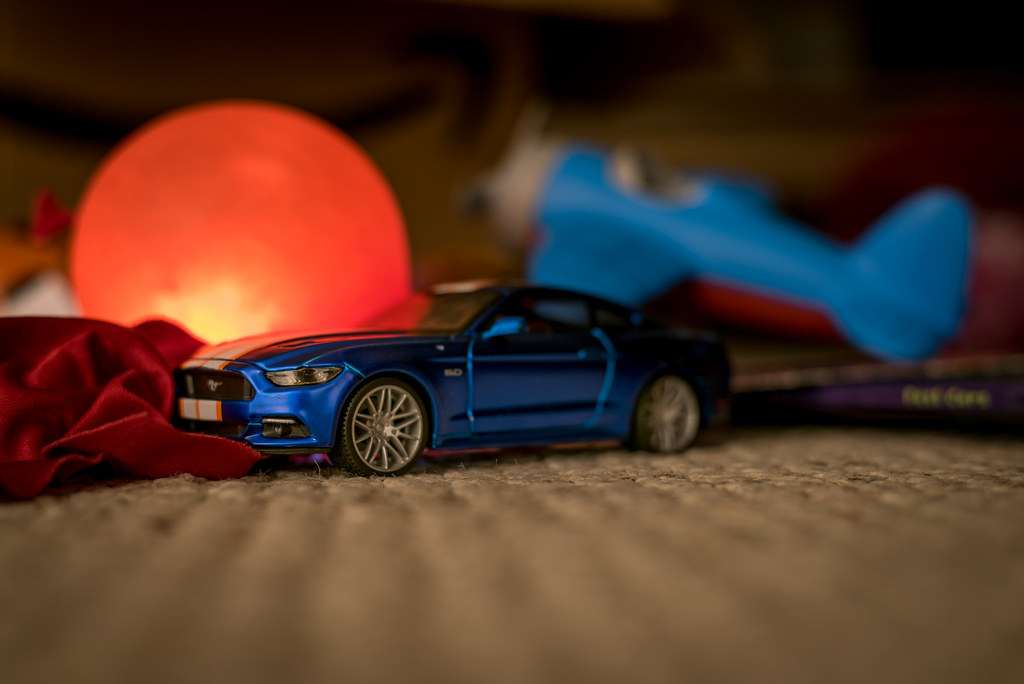
The story of this picture, which is just a few of my kids’ toys on the living room floor in the wee hours of the morning, begins with this talk by National Geographic photographer Sam Abell. In it he discusses, among other things, the process through which he created one of his most famous pictures, Pears in Window, Moscow. His presentation is kind of long but well worth your time if you have an interest in learning more about photographic composition, and one thing he discusses is composing your pictures in such a way that all the elements (foreground, subject, and background) all come together to form a cohesive whole. Now, this picture of a toy car is so far from one of Sam Abell’s masterpieces that the two hardly seem worth mentioning in the same blog post, much less the same paragraph. Nevertheless I did use a bit of what I learned from Mr. Abell when I made this image so I thought I’d share it here.

I took this picture on a Tuesday morning before my kids were up and I just wanted to use my camera. I got out my D750 + 50mm combination and went around the house taking pictures of anything I could find, like a bottle of olive oil, some cups on the table, or a paintbrush that had been cleaned the previous evening. I didn’t think about whether something would make for a good picture, but instead just focused on using my camera to make some images and if I didn’t like them I’d just delete them. After a little while I came across this blue car on the floor surrounded by a balloon, airplane, and other sundry items which made me stop and think a bit about what I learned from Sam Abell.

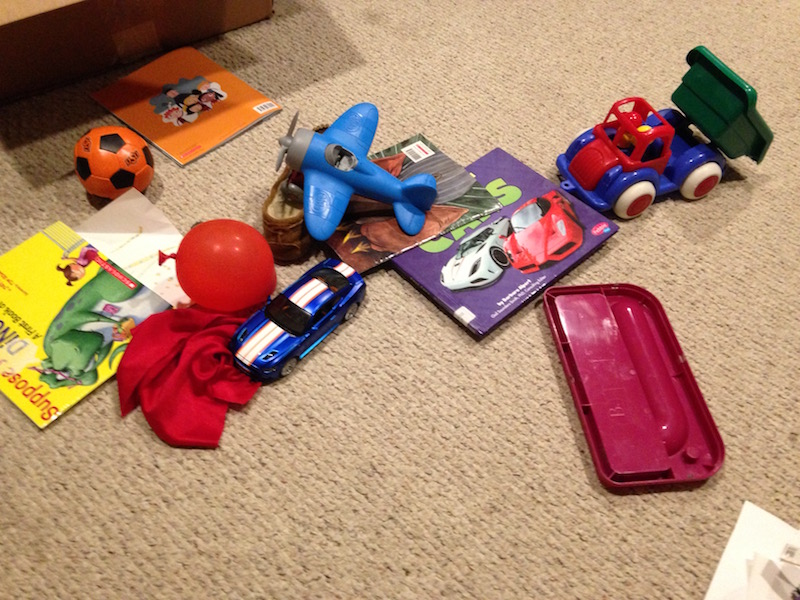
Same scene as above, but with the lights on.

When he took the picture of pears sitting on a window ledge, he spent 12 hours trying to get just the precise shot he wanted. He looked at all the elements of the scene: the pears, the curtain, the buildings, the sunlight, the clouds…everything. He watched and waited and took several pictures throughout the day and it was only when all the elements came together that he finally got the picture which went on to become one of the most famous in the history of National Geographic. My picture of a few toys won’t go anywhere and will be entirely forgotten by me and the rest of the world in a few days (and that’s fine with me!) but nevertheless I tried to put into practice a few things that I learned from this master photographer. I moved the airplane just slightly to the left and propped it up with a slipper; I put a tiny flashlight behind the red balloon; I stuffed the red cloth under the front of the car. I also used live view and set my camera on the floor to keep it steady so I could shoot with much longer exposures of 3 or 4 seconds at ISO 100, and I focused manually to get precisely the right part of the car in focus. (Using live view you can zoom in to check that things are focused how you want them and then take your shot, which can be really handy sometimes.)

The result is not a special picture in and of itself, but instead it was the process of taking the picture that meant something to me and is the reason I’m sharing it here. It represents another footstep on the never-ending path of learning photography, and I hope will help inform how I approach other pictures from here on out.

Read my educational photography articles at Digital Photography School

Two Weeks

March 2, 2016 14 Comments

Two Weekshttps://www.weeklyfifty.com/wp-content/uploads/2016/03/WeeklyFifty2016March2TwoWeeks.mp3

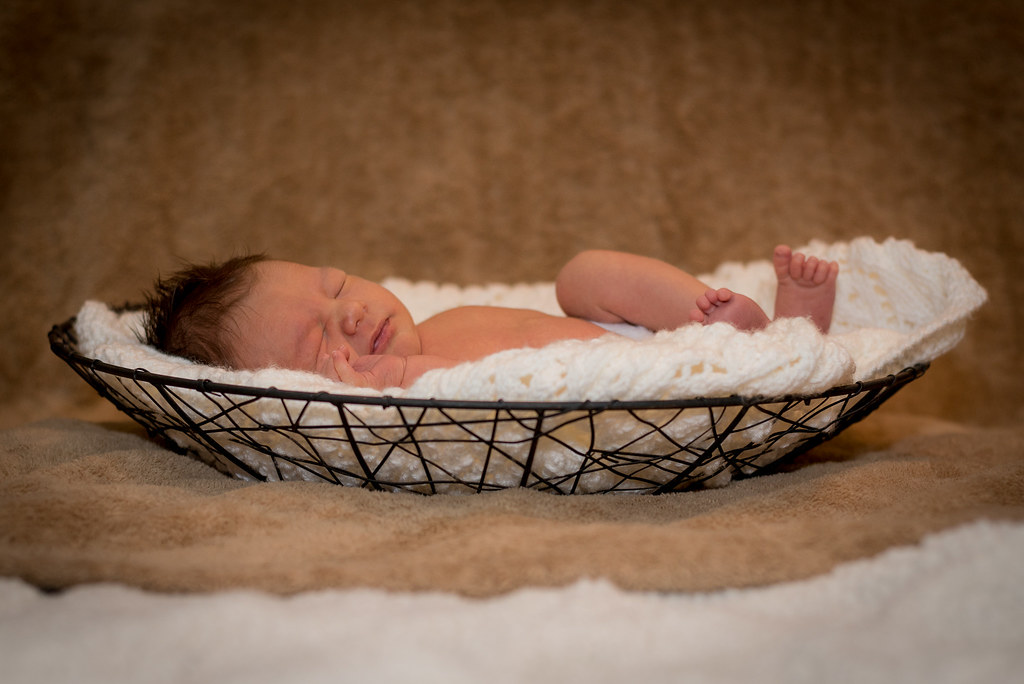
First things first: this is not my kid :) He is, however, the son of a friend of mine who was kind enough to let me come into her home and take a few pictures when he was only two weeks old. This type of photography has long intrigued me and I was so glad she was willing to let me come over and spend an hour taking pictures of her son and her five-year-old daughter. Several aspects of this photo session were somewhat unique, and even though things got a bit tricky at times I was overall quite pleased with how everything went. This post, then, is sort of a breakdown of the entire session along with a few lessons I learned along the way. Hope you like photo talk, because here we go…

When my friend had her baby, my wife and I immediately started planning for this photo session. (Actually, we had been thinking about it for a while but things really ramped up when we knew the pictures were imminent.) We looked online for examples of infant photography, investigated any equipment we might need to buy, watched videos from experienced photographers who take photos of babies, and even tried a few test shots in our living room using stuffed animals as placeholders. We went to Hobby Lobby and looked at several baskets and ended up choosing the one you see here, and sorted through all our blankets and fabrics to find a couple that would work for padding as well as aesthetics. I went to the session with the following gear:

Nikon D750 which I used for every photo because it’s awesome :)

Nikon D7100 (I brought this as a backup and did not end up using it)

50mm f/1.8 lens, which I used this for 80% of the shots

85mm f/1.8 lens, which I used for about 15% of the shots

35mm f/1.8 lens, which is a DX lens that works surprisingly well on my FX D750, albeit with some vignetting. I only used this on a couple shots and kept it at f/4 to reign in the dark corners.

Nikon SB700 speedlight which I used on almost every photo

5-in-one reflector that I didn’t use at all

Step ladder so I could take some photos from above

Blankets and lots of them. Some for backgrounds, some just to keep the baby comfy

Makeshift backdrop holder constructed from a piece of masonite board and some clamps from Lowe’s

Space heater to keep the baby warm. This was so useful it’s not even funny, and I’ll never do another infant session without it :)

The session took about an hour, not including some time to set things up and then tear them down at the end, and I think that was probably about the right amount of time to spend. I didn’t want to wear out the baby or his big sister, and the family had other things to do than spend hours upon hours taking directions from a photographer. I had taken hundreds, perhaps thousands, of photos of my own sons when they were infants but had never done a shoot quite like this for someone else so while some of this gear might have been a bit gratuitous I also wanted to make sure I was prepared for anything.

I started off with my D750 and 50mm lens which worked quite well, and since we were shooting indoors in the evening I had to use my flash to make sure everything was evenly lit. I almost bought a portable lighting kit for the shoot but I had to find a way of striking a balance between getting pictures and having a practical setup, and a big old softbox or some umbrellas for off-camera strobes just seemed like overkill especially since I was a guest in someone else’s house. One of my favorite tricks when using a speedlight is to bounce it off other surfaces to magnify the impact of the light, and for the picture you see at the top of this post I had the flash pointed straight up which essentially turned the ceiling of the room into one giant light bulb. It worked remarkably well for this as well as almost every other picture from the evening, and if you are interested in learning more about photography but don’t yet have a dedicated external flash I would recommend picking one up.

A few times during the evening I switched to the 85mm lens but found that it was a bit overkill and the depth of field was a little too shallow to properly manage without stopping my aperture way down. I wasn’t interested in compressing the background as much as I wanted clear shots of the baby, so mostly I just stuck with my old pal, the classic Nifty Fifty lens. I know it might sound a bit cheesy but the entire session really was a great deal of fun and I thoroughly enjoyed getting the chance to practice my baby photography skills, as this is an area that my wife and I would like to explore more for our side project Stevens Creek Photography.

To my friend…if you’re reading this, thank you for having me over and I can hardly believe how much your cute little guy has grown already. I hope you like the pictures as much as I liked taking them!

Read my educational photography articles at Digital Photography School

Sentinel

February 24, 2016 12 Comments

Sentinelhttps://www.weeklyfifty.com/wp-content/uploads/2016/02/WeeklyFifty2016February24Sentinel.mp3

(No, not that kind of sentinel.)

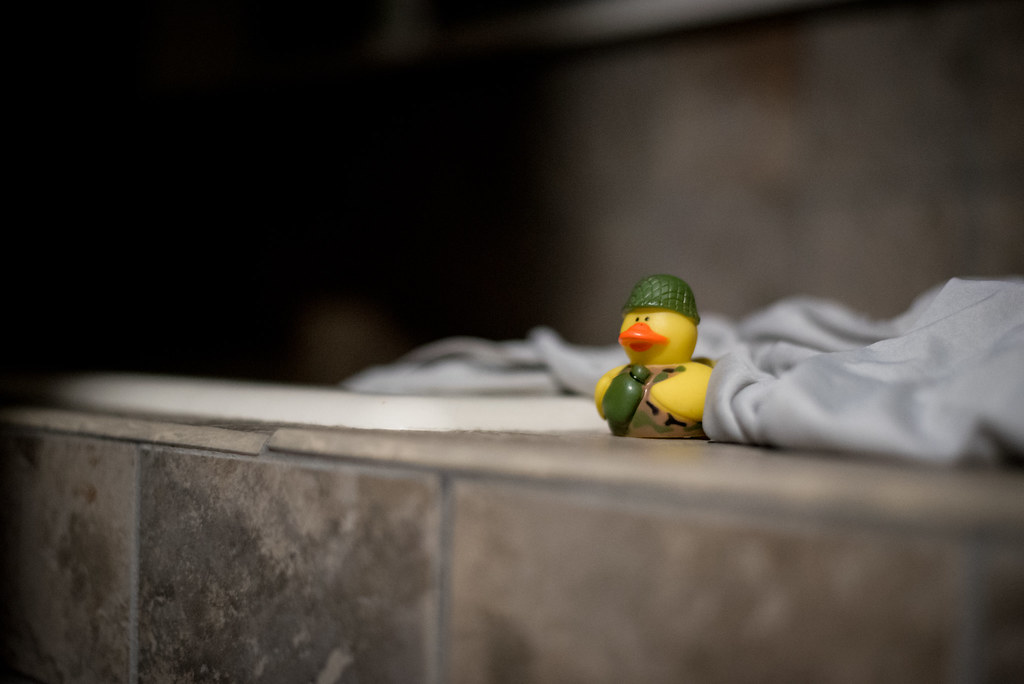
I’m not sure why I even thought to take this photo in the first place, and I’m not really sure what to think of it overall, but I do kind of like it. I was literally just brushing my teeth one chilly morning a few weeks ago when I happened to notice my son’s rubber ducky sitting on the edge of the bathtub. The sun was not yet up and the light you’re seeing is coming from the closet behind me, and I thought everything came together to form a kind of cool scene. I imagined this little yellow plastic waterfowl standing on the edge of a precipice keeping watch so as to alert the rest of his unit of any incoming enemy forces. Despite what was clearly a long, dark, and cold night this fella stood at his post and remained vigilant through the small hours of the night and would remain until the sun rose high in the morning sky. No ill would befall his friends tonight. Not on his watch.

I shot this with my D750 because the light was so dim that I knew I would need a higher ISO, and a relatively clean one at that. Also, I just like using any opportunity to take pictures that camera :) I don’t know if there is enough context to give you a sense that this duck is sitting on the edge of a bathtub, and I hope you don’t mind a picture with my pajamas all wrinkled up in the foreground, but if nothing else this photo brings a bit of a smile to my face. It’s probably a bit conceited to say this is a good picture but I do think it works to illustrate how you can find compelling photo opportunities in everyday life even when things seem kind of dull and boring. Of course it never hurts to get some interesting lighting conditions such as the wee hours of the morning, late at night, or on a cloudy day. In fact, I would recommend this as a possible course of action if you are ever struggling to find ways of jumpstarting your own photography: get up a bit earlier or stay up a bit later and pay attention to how ordinary everyday objects give off a whole new impression with the different lighting conditions.

There’s also one final note about the picture I thought might be worth mentioning. I shot this at f/1.8, (ISO 6400, 1/90 second) which meant the depth of field was razor thin especially since I was using a full frame camera so close to my subject. I think that’s why the duck’s head is just a bit out of focus, and the next time I take a shot like this I’ll make sure to double check that everything is sharp before shutting things down and going on with my day. I’m kind of curious to return to this scene tomorrow and see if my kids have played with this duck, and imagine what other things he might have been doing in the meantime…

Read my educational photography articles at Digital Photography School

  • « Go to Previous Page
  • Page 1
  • Interim pages omitted …
  • Page 104
  • Page 105
  • Page 106
  • Page 107
  • Page 108
  • Interim pages omitted …
  • Page 138
  • Go to Next Page »

Copyright © 2026 Creative Commons License
This work is licensed under a Creative Commons Attribution-NonCommercial-NoDerivs 3.0 Unported License.