• Skip to main content

Weekly Fifty

Exploring the wonders of creation through a 50mm lens...and other lenses too.

  • Subscribe
  • YouTube
  • About

Black Cotton

December 7, 2016 10 Comments

Black Cottonhttps://www.weeklyfifty.com/wp-content/uploads/2016/10/WeeklyFifty2016December7BlackCotton.mp3

This photo was directly inspired by my cousin Beth who recently (well, as of the time I write this) uploaded her 2000th image to Instagram:

https://www.instagram.com/p/BLcFFARAh0p/

I begin almost every day with the same routine: get up long before my wife and kids, shower, spend about 5-10 minutes in quiet prayer, eat breakfast, and then play a video game or read a book until the rest of the family wakes up. On a quiet morning in mid-October I found myself looking out the glass door on the south side of our house as I prayed, and in what was kind of a strange moment for me I asked the Lord for inspiration. I had been feeling a bit down, photographically speaking, and was having trouble finding motivation to get out and take pictures. It was only an hour later that I saw Beth’s post on Instagram and it was just the spark for which I was looking. I thought to myself “That image is so beautiful, I want to go take one like it.” So I set out later that day with my D750, 50mm lens, +10 and +4 close-up filters, and went to take a picture like the one I had seen earlier.

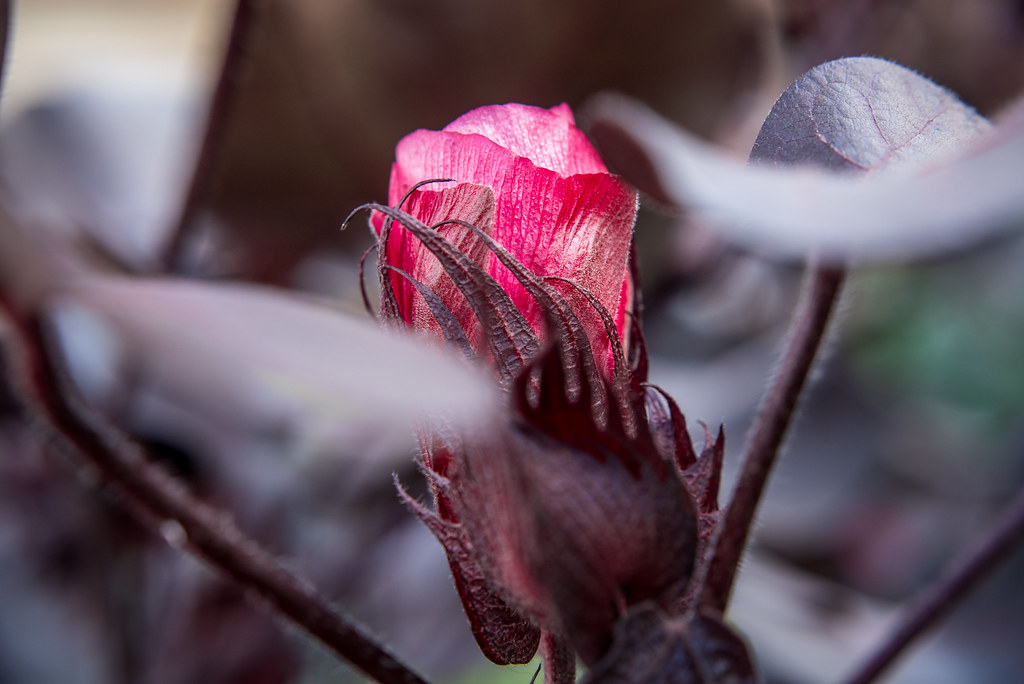
The result of my brief photographic excursion is this image of a Black Cotton flower which, ironically, has very little in common with Beth’s picture. It was hers that sent me on the journey though, and that’s what matters. I have tried, mostly in vain, for years to get a close-up picture of an insect like a bee or butterfly resting atop a flower and you will note that I still have yet to succeed. But going out with that goal in mind, sort of like my recent picture of a couple of bikes, helped focus my mind and give me a clear idea of what to aim for with my camera. Before I shot this picture I took a few others of a small pepper bush and a diamond delight plant at the Price Family Garden and was not extraordinarily pleased with the results I was getting. I was about to leave the garden altogether when I saw this pink flower cradled between deep purple leaves and knew that it was going to make for a good picture.

I knew my +10 filter would put me too close and remove any sense of context, so I used my +4 and shot at f/5.6 to get the flower in focus but leave the foreground and background nice and blurry. My goal here was to get a sense that this flower is nestled, almost hidden, among the rest of the plant and that the purple fringes surrounding the crimson petals would look like the fingers of a hand delicately holding it in place. I was very pleased with how sharp the final image looked and didn’t use much post-processing on it either, preferring instead to let the image stand on its own.

Beth, if you’re reading this thanks for the ideas you constantly send my way. And to everyone who might be reading this and looking for ideas and inspiration, I hope you find it one way or another and that right soon :)
Read my educational photography articles at Digital Photography School

Il est fini

November 30, 2016 4 Comments

Il est finihttps://www.weeklyfifty.com/wp-content/uploads/2016/10/WeeklyFifty2016November30IlEstFini.mp3

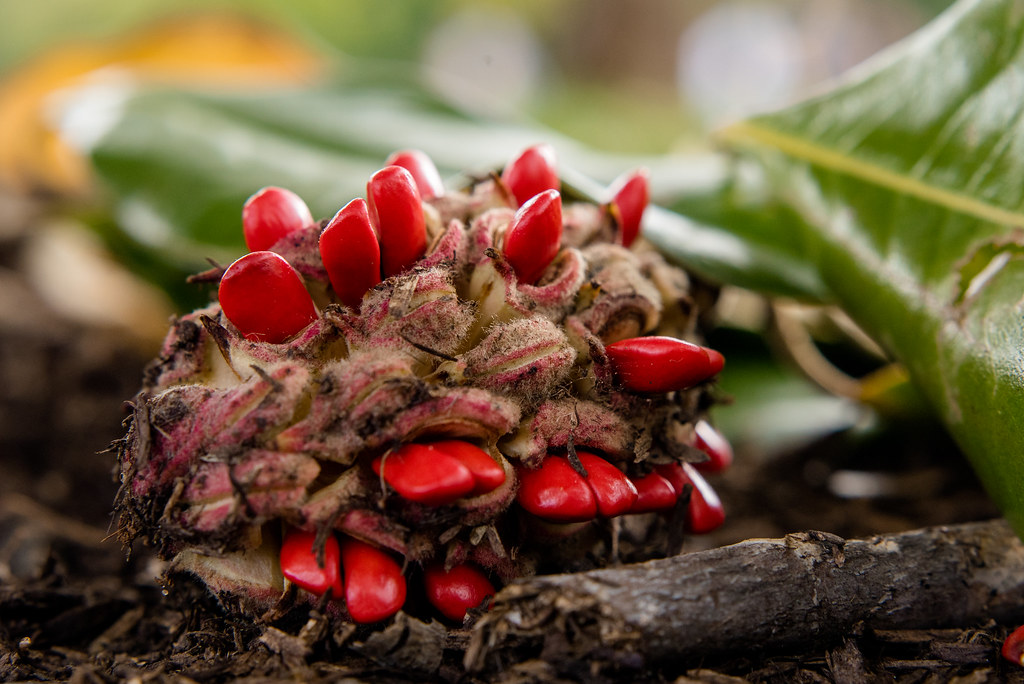
Well here you have it folks, the final in my long-running series of pictures of the magnolia tree. It’s almost a compulsion at this point since their flowers and seed pods are so…well, I guess they kind of run the gamut from beautiful to curious to downright frightening. But wherever you stand on that spectrum it’s hard to deny they make for fascinating photo subjects! These trees are scattered all over campus, and indeed all over town, and it’s hard to not take pictures of their flowers and seeds over the course of a year. Since this was the first season that I had my close-up filters to go on my 50mm lens I just couldn’t resist documenting the transition from bud to flower to seed, with this being the final image in the series. I hope you like it :)

These seed pods usually start falling to the ground in late October and as I went out with my camera to capture a picture of one I had a couple goals in mind. I knew I wanted to find a  pod with several bright red seeds sticking out, and I knew I wanted it to be already on the ground as opposed to still attached to a tree. I was hoping to get a bit of dimension to the picture in terms of foreground and background, and I purposely took my +4 filter so I could get close without getting too close. It took a few days but I finally was able to capture the image you see here and I am quite pleased with how it turned out. I took a different photo a few days prior to this one that was OK but not quite what I envisioned, so I went back out and was able to get this one which was much closer to what I was picturing in my mind.

One nice thing about my D750 is the flip-out screen which doesn’t come in handy all that often, but when you need it it sure is useful. I set my camera on the ground and used Live View with 100% magnification to make positively sure the shot was in focus how I wanted, and got a shot that would have been very difficult if not impossible with the optical viewfinder alone. I think it also helped to have  a clear vision for exactly what I was going for when I went to take this shot as it made the process more streamlined and…well, focused, if you excuse the pun :)

I shot this at f/5.6 and a few others at f/2.8 but really liked the wider depth of field and sharpness of the former vs. the latter. In my view it has just the right amount of foreground and background blur, and it illustrates the less-is-more lesson that I have been learning for years when it comes to things like shooting with larger apertures. Anyway, if you are tired of the magnolia seed photos rest assured you won’t see any for a good long while but come next Spring we’ll have to see what happens…

Read my educational photography articles at Digital Photography School

Knotted

November 23, 2016 4 Comments

Knottedhttps://www.weeklyfifty.com/wp-content/uploads/2016/11/WeeklyFifty2016November23Knotted.mp3

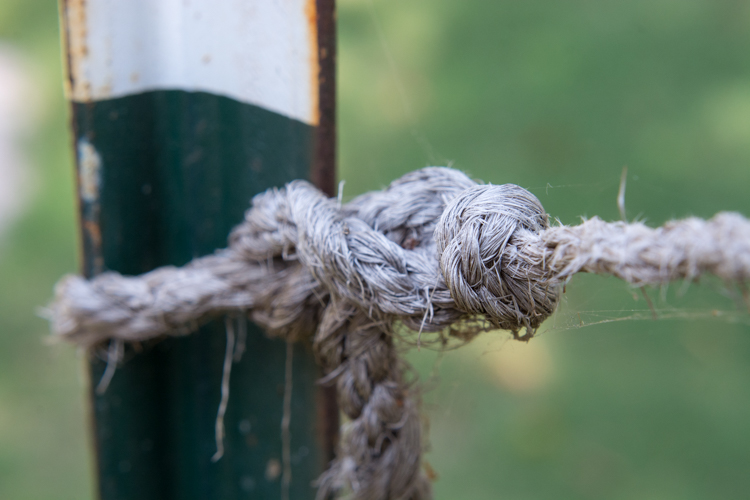
This picture was a bit of a departure for me in that I normally take close-up pictures of things in nature (flowers, plants, bugs, etc.) but when I was out walking around Theta Pond on campus one day I came across the rather innocuous scene of a young tree held in place by a few stakes and some rope. It’s quite common and, honestly, quite unremarkable and yet I thought I would see what I could do with my D7100, 50mm lens, and +4 close-up filter of which I have become quite fond. That particular filter, I have discovered, strikes a nice balance between allowing me to focus much more closely than normal without getting too close and thus obscuring far too much of the background or the rest of the subject.

One of the most important things I a continue to learn about photography is the power of restraint: You don’t always need to shoot at f/1.8. You don’t always need to shoot at ISO 100 or 6400. You don’t always need ultra-close macro-style magnification. You don’t need to take 100 shots when 10 or even 1 will suffice. You don’t need to share every single photo online. The list goes on, and because this lesson is something I am rather slow to learn this picture is not one that I would have ever gotten six months ago. I would have used my +10 filter (to get super close!) and shot at f/2.8 (to get super shallow depth of field!) and the result would have been a blurry disaster. Instead after learning to hold back and taking a more considered approach, I shot this image using my +4 filter at f/8 and got a much better picture.

I like the simplicity of this picture, with just two elements (the post and the rope) and a clear point on which the viewer should focus, that of the knot itself. I like the telltale signs of age: a fraying rope, rust on the edges of the post, and thin strands of a spider’s web. I also like how there’s a clear sense that something is happening here, or at least I hope it’s clear. The rope isn’t just dangling from the post, but being stretched tight as outside forces are clearly acting on it. It is serving a purpose, whatever that may be, and despite its ragged nature it continues to dutifully hold on. To hang in there, if you will, regardless of what else happens around it. I don’t know that there is any grand metaphor or larger story to tell here, but I am quite pleased with how the final image turned out.

I also tried a few things in the editing process in order to get just the right look I was going for. This is the original unprocessed RAW file:

dsc_7517-2

It’s OK but not great, so I made a couple key edits in Lightroom:

  • Adjust White Balance to 6300K
  • Added just a bit of vignette
  • Lowered highlights and black levels, raised shadows and whites just a bit
  • Adjusted the tone curve from a straight line to more of an S-shape to add some contrast
  • Adjusted the tint of the green
  • Lowered the overall saturation of the image

And a few other things too. None of these were all that dramatic but the resulting picture is much more impactful because of it. In fact even learning to properly edit a picture has been an ongoing exercise in restraint, and I have had to learn the hard way that a few subtle edits are generally much more impactful than upping Clarity, Saturation, and Contrast. Basically if you were to assign a theme to this whole blog post it would be that less is more, both in photography and in editing, and it’s a lesson I will likely have to continue learning for many years to come :)

Read my educational photography articles at Digital Photography School

Sunrise Spider

November 16, 2016 9 Comments

Sunrise Spiderhttps://www.weeklyfifty.com/wp-content/uploads/2016/09/WeeklyFifty2016November16SunriseSpider.mp3

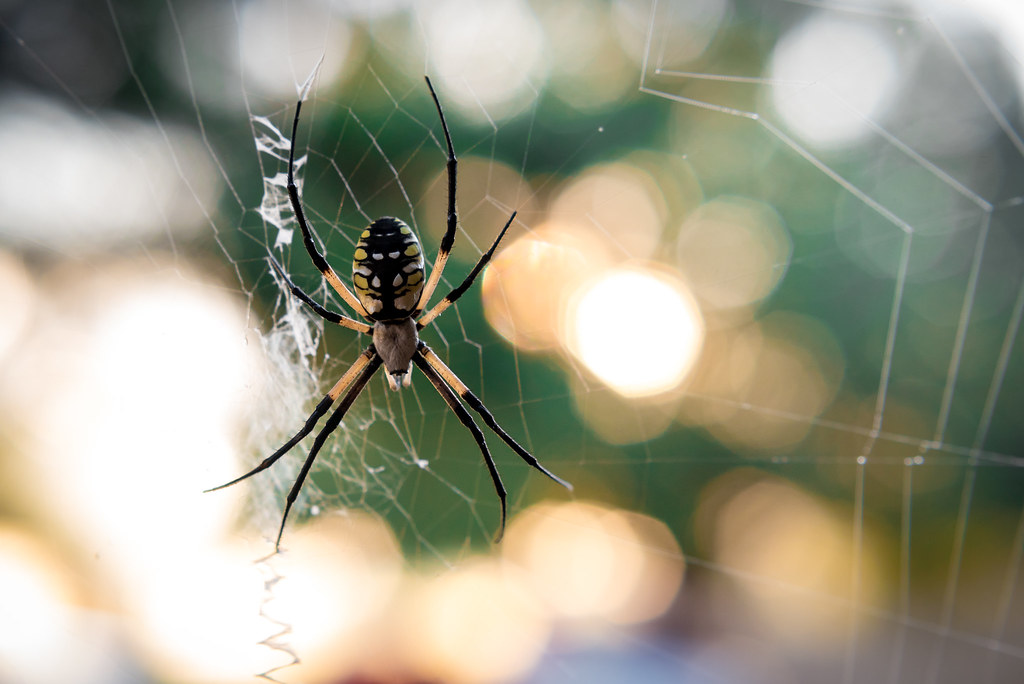
Keen readers of this blog might have noticed that each year around this time I post a picture or two of a spider, and if you have been wondering when the 2016 edition of such a photo might show up…well, here you go :) The ones I just linked to were all taken right in my own back yard, and this week’s picture was shot only a few feet away from where I made the backlit image of a spider at night. I guess it just goes to show you how rich and vibrant nature can be even without leaving your own property. Though in this case I must give credit to my wife who actually spotted this year’s spider, and had she not said something I might have knocked its web into oblivion by accident while we were clearing away some shrubs in the yard.

As you might have guessed, one thing that makes this particular spider different from any of the others I have posted is that this time I had my set of close-up filters to play with. I knew a +10 filter would be way too much, and the spider’s body would fill the frame and leave no room for the legs or anything else. A +1 or +2 would probably not do a whole lot, so I set out with my D750, 50mm lens, and +4 filter. The results were fantastic, if you don’t mind me saying so. This is the type of picture I wish I could have gotten for the past three years, and to finally be able to take it was a huge personal victory for me. Looking back on the other images I can clearly see a progression in terms of composition, framing, and lighting and I think one could draw a pretty direct line from those earlier images to this one in terms of an overall learning curve. Not that it’s the end result, mind you, but just another step on what I guess you could call my own photographic journey. Certainly I have a ton left to learn (especially since I don’t even have a true macro lens for shots like this) but this image was nice validation that I am learning more along the way, bit by bit.

This picture was taken on a Sunday morning as we were all getting ready to go to church but we had just a few minutes to spare before loading the kids up in the car. The boys and I went outside to check on the spider, which we had seen and photographed the night before after we fed it a cricket:

dff_8157small

Overnight the spider had evidently finished off the cricket and, as this kind of arachnid usually does, kicked the carcass out of the web and subsequently rebuilt any damaged threads. When we went to view it in the morning it was hanging out, literally, on its newly-refreshed web enjoying the sunrise and waiting for an unsuspecting moth or other insect to wander into its silky trap. With the sun peeking over the horizon there was a window of just a few minutes where I knew the spider would be nicely backlit so I took a few dozen shots, some at f/4 and some about two stops smaller, and was quite pleased with the majority of them. In fact the only real problem I had with the photo was choosing which one I liked, and enlisted the help of my wife with her keen eye for color and detail who also helped me decide to crop the picture so the spider is just a bit on the left side.

I tried hard to compose the picture in such a way that the glowing sunlight poking through the trees would serve to frame the spider itself, and I think the end result works out quite well. A few minutes later the sun had risen past the treetops and this particular photographic moment had vanished, but I was glad I could catch it for posterity. In the days after this picture was taken my boys and I continued to keep our garden spider well-fed thanks to a steady diet of crickets and grasshoppers we found in the yard and while it did hang around for a while it eventually went wherever spiders go in the winter. Who knows…maybe it will show up next year for another round of spider pics :)

Read my educational photography articles at Digital Photography School

Bike Framing

November 9, 2016 4 Comments

Bike Framinghttps://www.weeklyfifty.com/wp-content/uploads/2016/09/WeeklyFifty2016November9BikeFraming.mp3

This week’s picture isn’t so much about capturing beauty, making art, or anything like that. Rather, it’s mostly just an illustration of a photographic principle I have been working on for as long as I have been interested in the medium. Framing and composition are two of the fundamental elements of picture-taking, and I shot this picture of two bicycles specifically as a personal exercise in order to work on these concepts. But first, as I sometimes do here on the blog, a bit of background…

A while ago I ran across this image on Instagram:

View this post on Instagram

A post shared by Eric Buller Photography (@ericbullerphotography)

I found it when I was looking through the portfolio of a photographer named Eric Buller who had left a comment on one of the Weekly Fifty pics I posted to my own Instagram account. Turns out Mr. Buller started shooting with a 50mm lens because of this Weekly Fifty blog (I’m so glad you found this blog to be helpful, Eric!) and when I saw his picture of some bicycle wheels I was struck by the richness of the image, the colors of the bike forks and spokes, and the untold stories behind each of the two-wheeled transporters. I don’t know if go so far as to say I was inspired by it, but I certainly did want to use it as the basis for a few pictures of my own. There’s bikes all over the OSU campus and so one overcast Friday morning I went for a short walk around the school to see if I could get a similar picture.

Turns out I was way wrong, and no matter what I tried I just couldn’t capture an image with the richness of Eric’s photograph. Most of the bikes on campus are newer, shinier, and less colorful than the ones in the original which served to make most of the images I was taking look rather boring. When I saw the bike in this week’s picture above I realized that I could use that as the basis for practicing both framing and composition. It’s a far cry from creating an image like the one Eric posted, but it was a fun and useful photographic moment for me so I considered it a win :)

I knew I wanted to shoot the bike from the front and at a lot angle, but the tricky part was how to use the other elements in the composition to properly frame the bike. There were three main things in play: the blue bike in the foreground, the purple bike on the left side, and the vertical bike rack between them. I wanted to get an image that used the two latter elements to accentuate the former, but doing so proved to be a bit tricky because of one other, rather obvious, problem: students. They were everywhere, as you might expect, and I had to basically lie in wait until the shot I was looking for presented itself:

dff_8095

While this wasn’t bad I realized I wanted to add a dynamic element to the image by way of filling the gap between the blue bike and the vertical rack with a student. I waited for one to pass by and snapped another image:

dff_8100

Bingo! This was the shot I was hoping to get…except for one problem. As I reviewed my images I realized I had cut off the purple bike’s rear wheel, which made the overall composition feel somewhat amateurish. I was looking at the bike frame, not the tires, and thus failed to see the complete picture. I liked almost everything else about this, especially the smooth background thanks to using my lens wide open at f/1.8 in the first shot, but I needed to correct the compositional error. So I scooted over and waited for one of two conditions: one student passing through or none at all, both of which were a little tricky given the hustle and bustle of a college campus. I did get a shot where no students were in the frame, which I ultimately used as this week’s image, but before I could get any more someone rode on over and locked his bike up to the empty rack in the picture. Ah well, such is life, eh? :)

The whole exercise was a fun way to practice composition, and though I wish I would have been able to get a shot wide open with one student in the background and the two other bikes perfectly framed with the bike rack between them…it was, as Wayne Campbell said, “never meant to be.” It does give me ideas for future pictures, and many thanks to Eric Campbell for providing the impetus for me to get out and shoot some pics of bicycles. Keep up the good work man!

Read my educational photography articles at Digital Photography School

  • « Go to Previous Page
  • Page 1
  • Interim pages omitted …
  • Page 105
  • Page 106
  • Page 107
  • Page 108
  • Page 109
  • Interim pages omitted …
  • Page 146
  • Go to Next Page »

Copyright © 2026 Creative Commons License
This work is licensed under a Creative Commons Attribution-NonCommercial-NoDerivs 3.0 Unported License.