• Skip to main content

Weekly Fifty

Exploring the wonders of creation through a 50mm lens...and other lenses too.

  • Subscribe
  • YouTube
  • About

Emerald Lake

August 31, 2022 7 Comments

IMG_7399

And now, as Monty Python might say, for something completely different. I have only seen the mountains a few times in my life: once on a trip out to Seattle with my wife in 2016 and…well, maybe one or two other times but I guess it sort of depends on your definition. I have flown over mountain ranges on the way from A to B, and have also had layovers in Denver, but I don’t think I have ever really spent time in the mountains, so to speak. That all changed this summer when we took our kids out west to spend a week in the Rockies with some friends of ours from way back in the day. (After all, friends from back in the day are some of the best you’ll ever have.)

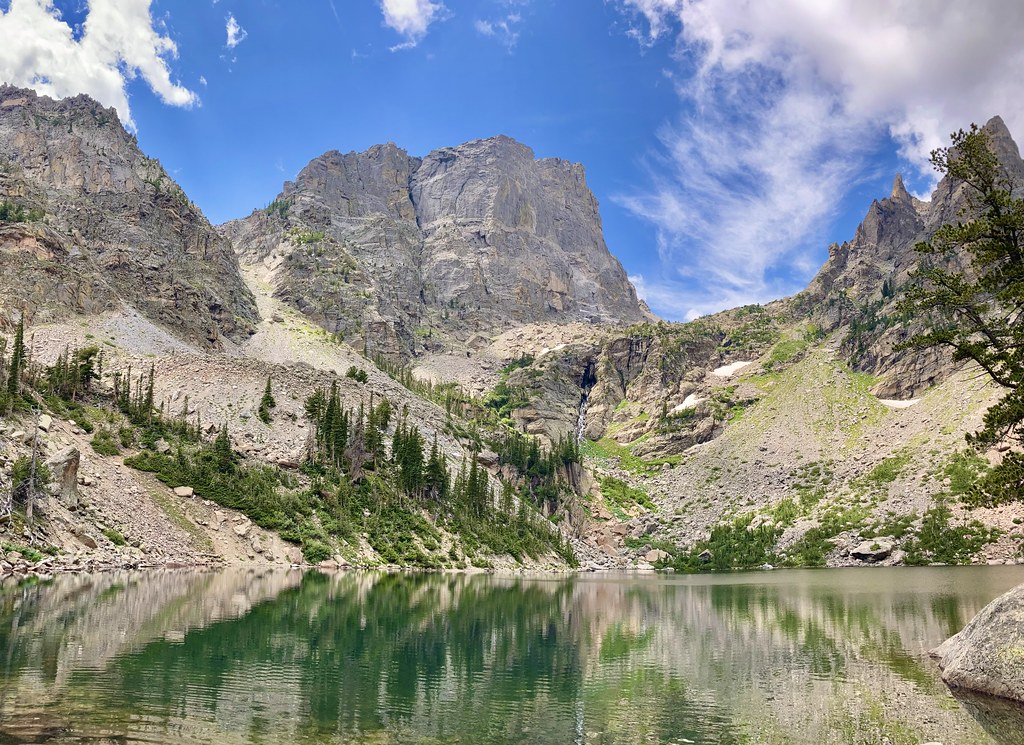
We stayed at YMCA of the Rockies which was surrounded on all sides by breathtaking views of the mountains, but also took three separate trips to Rocky Mountain National Park which was about a four-minute car ride. On a warm Tuesday afternoon we hiked a few miles on Bear Lake Road to Emerald Lake, which is where I shot the picture you see here. I had thought about picking up a wide-angle lens for this trip, and kept my eye on the Nikon 20mm hoping it would go on sale but alas, it was not meant to be. No big deal though: I did just fine with my Fuji X100F and…my iPhone.

Yeah, I’m not afraid to admit it: I used my iPhone SE 2020 for more of these kinds of landscapes more than I thought I would, but it was mostly because its 28mm-equivalent lens was wider than any other lens I own. But even that wasn’t enough to capture this view, which meant I had to resort to a feature common on most mobile phones but not many DSLRs: I used Panoramic Mode. It took me a few attempts to get the scene just right, but in the end I’m pretty happy with what I was able to capture. The mountain is crisp and sharp, the lake is smooth, the sky is bright and blue, and most importantly, this image helps me remember the scene as I saw it on that day.

Read my educational photography articles at Digital Photography School

Class of 2023

August 24, 2022 Leave a Comment

DSC_3448.jpg

This is the kind of picture you almost never see here on Weekly Fifty because, as you probably know by now, I like to keep things mostly people-free and stick to nature and objects and other things of that nature. When I do post pictures of people, especially my kids, I don’t use faces. This one is an exception though, not because of the person specifically but because of all the elements that went into taking this shot. I have a side project taking portraits (not really a business, since I only do a couple photo sessions a year) that allows me to flex my creative muscles in a bit of a different way compared to photos of flowers and animals and this is an example of the type of portraits I really enjoy doing.

A few weeks before our annual extended family trip to Kansas my sister-in-law asked me if I would take photos for her son who is about to enter his senior year of high school. I gladly obliged and immediately turned down any offer of payment since I like to do this kind of things for free when family is involved, and set about getting my gear ready and thinking about the kinds of shots I would want to take. The day before I took this picture I was out walking around the resort with my brother, my wife, and some of the nieces and nephews when I saw a wall of trees with sunlight poking through the branches and thought it would make for a nice portrait location. I had my D750 and 50mm lens with me, and asked my niece if she would basically serve as a stand-in while I evaluated the lighting and took some test shots. The next day when we were doing the photo shoot my nephew and I went to the same spot, albeit with some upgraded camera gear, and took a bunch of shots similar to what you see here.

I took this with my favorite portrait setup, the amazing Nikon 70-200 f/2.8G ED VRII, and my D750 with the battery grip (which helps balance out the weight of the lens. Oof, that thing is a heavy beast.) I zoomed in all the way to 200mm and shot wide open at f/2.8 because I wanted to get the spots of light as bokeh-tastic as possible, and it worked like a charm. The slightly overcast sky also gave us plenty of dispersed light such that even though he was backlit his face is still evenly lit with enough contrast to give him plenty of depth and dimension. The light on his right shoulder (on the left side of the composition) adds another layer of depth to the image and is a good example of why backlighting can be so effective. Finally, I made sure to position him and myself in such a way that the background blobs would be dispersed around his head and not directly behind his head—though there is a bit of an exception on the top-left side of the frame.

Shooting portraits with that lens, especially at 200mm and f/2.8, can be tricky due to the extraordinarily shallow depth of field but if you have a subject who is able to take direction (unlike, say, a young child) the results can be amazing. I know other photographers prefer to shoot at 85mm or 135mm, and those are great too, but I continually come back to the versatility, utility, and just plain sharpness of that 70-200 f/2.8 lens. It’s amazing :)

Read my educational photography articles at Digital Photography School

Calm Waters at Sunset

August 17, 2022 4 Comments

FUJI2510.jpg

Every year my family goes to Milford Lake, Kansas, to spend a few days catching up on things, fishing, swimming, boating, tubing…all the normal kinds of things you might do while vacationing at the lake with siblings, nieces, nephews, and parents. And the occasional four-legged family member too :) Normally I return from those trips with a handful of shots to put up here on Weekly Fifty, but this one was a little different. I found that, contrary to most of our trips over the years, I did not take as many shots of the world around me and instead most of my pictures were the people around me. Not that vacation-based photography has to be one or the other, but I didn’t find that I had my usual inspiration or creative spark for taking photos of nature, even with my macro lens that I specifically brought with on the trip for that exact purpose.

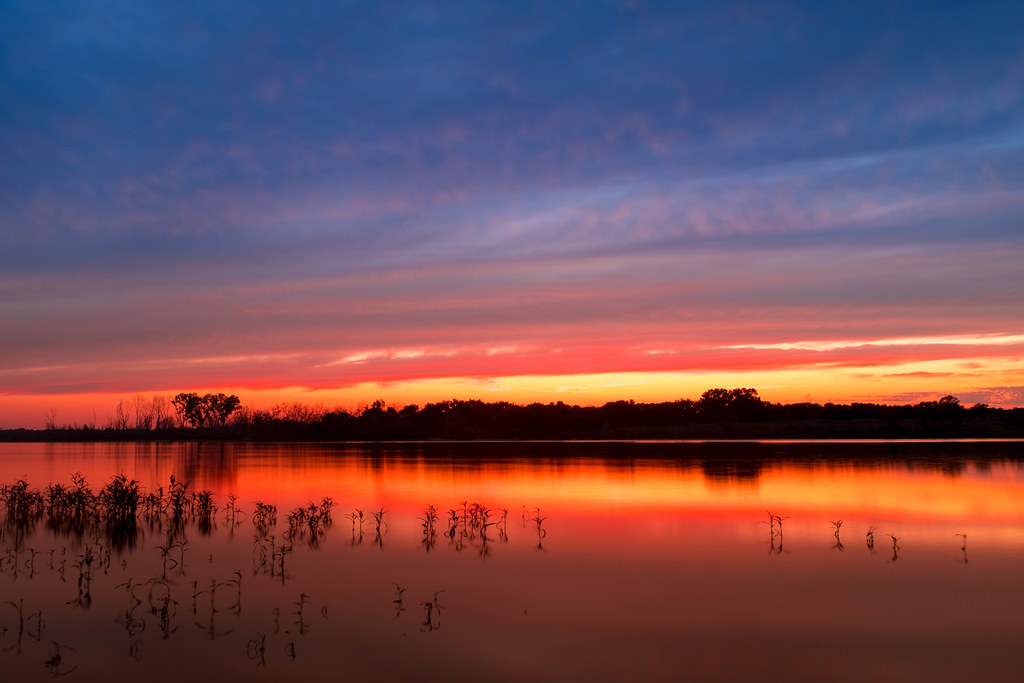
The exception to all of this is the shot that you see here, which is one of the last pictures I took during the entire trip. It was a warm Monday evening in late July and those of us who were left at the cabin, after some others had gone home due to work and other obligations, were sitting by the campfire watching the light fall and the fireflies begin their daily dance while we roasted marshmallows and chatted about life. As the sun settled behind the horizon I saw a great opportunity to take a picture before the last bits of daylight faded away, so I ran to the cabin, grabbed my tripod and Fuji X100F, and hightailed it to the beach to take a few pictures.

The key to shots like this is a long shutter, which smooths out any ripples or imperfections in the surface of the water, and it’s the kind of scenario that the X100F is practically made for. It’s built-in 3-stop ND filter means you can leave the shutter open for much longer than normal, and get some great results that are basically impossible with a smartphone. I ended up shooting this at f/16, ISO 200, with a 13-second shutter and I’m super pleased with how things turned out. (After a bit of tweaking the RAW file in Lightroom, of course.) You know what I really like about this though? The reflections of the grass, or whatever those things are, in the water. The stalks are still but the reflections are blurry, because there actually were some subtle movements on the surface of the water. It lends an almost dreamlike quality to the image that isn’t present in a lot of my other sunset pictures I’ve taken over the years, and while I didn’t expect it I do quite like it.

Read my educational photography articles at Digital Photography School

Shrouded

August 10, 2022 1 Comment

DSC_2097.jpg

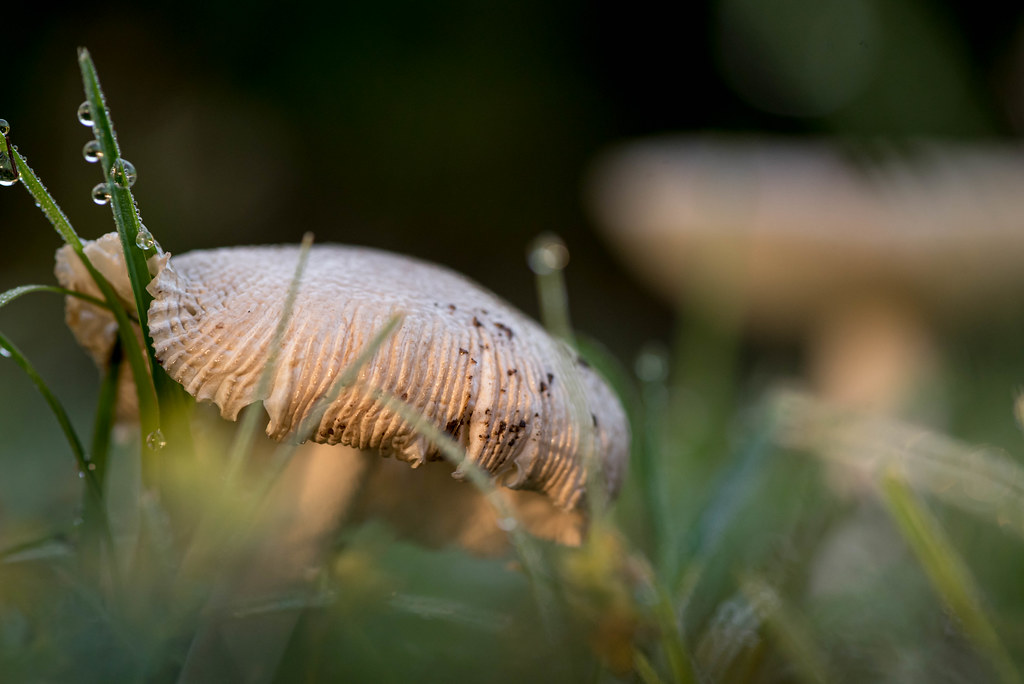
I was looking through my gallery of macro shots recently and discovered something a little surprising: I had no close-ups of mushrooms! The last time I got low on the ground to take a macro picture of fungi it was this shot from May 2021, and that was with my 50mm lens and close-up filters. (And also my first real experimentation with focus stacking, something I have not done since. Mostly because it’s more work than I’m used to doing, not because it’s particularly difficult to get the hang of the basics.) So when the sun was rising on a warm June morning, after a couple of rainy days to really get the ground nice and soaked, I ran outside and took this photo of a mushroom that had recently popped up in my back yard. Only this time I did it with my 105mm macro lens, which made a pretty big difference :)

I want to stop short of comparing the two images, since a discussion about which one is better kind of misses the point. Both are similar and unique in certain ways, and I used the former to inform my compositional and exposure choices about the latter. In short, they’re both good images and I see some things to like and appreciate in either one. As for this specific picture though, there are some things that I quite like. I used an f/11 aperture to get the front mushroom tack sharp which still left a depth of field shallow enough so as to make the blades of grass just a bit out of focus. (Something I continue to learn about shooting close-up images is that even smaller apertures can still give you razor thin depth of field. It’s still weird to wrap my head around that.) I intentionally composed the shot with one mushroom in front and another in the back to give a sense of space to the composition: foreground elements, subject, and background elements all working to form a complete picture. The only real issue I had when taking this picture was related to ISO: I didn’t want to go super high and lose detail or editing headroom, but 1400 on my D750 works just fine and has hardly any of the problems that can be associated with high ISO shots.

Mushrooms don’t pop up too terribly often in my daily life so when they do it’s fun to go out and take pictures of them, especially in the early morning while the dew is still fresh and the sunlight is just barely poking over the horizon. I hope I get more opportunities to take pictures like this soon :)

Read my educational photography articles at Digital Photography School

Morning Dewdrops

August 3, 2022 2 Comments

DSC_1491.jpg

Alright, enough with the Wichita Mountains pictures of sunsets and bison and lizards…here’s a classic Weekly Fifty shot like you might expect when you come to the blog, check my YouTube channel, or open up the email that shows up in your Inbox every Wednesday morning. The composition here is simple, classic, and highly effective: a clear subject, something in the foreground, a rich and layered background, and some cool bokeh to boot. This won’t win awards for creativity, but I’d be lying if I said that pictures like this aren’t a ton of fun to take.

Every spring we see an emergence of Indian Paintbrush flowers all over the state, but despite being quite commonplace their simple beauty is always pleasing to look at. I have taken lots of pictures of these flowers over the years and shared many of them here on Weekly Fifty, but never with a true macro lens. Not that there’s anything particularly macro about this shot, just that I was able to compose this image without any considerations for, or concessions being made because of, the distance between my camera and the flower. Instead I simply looked at the basics: subject, lighting, and exposure settings. I used an aperture of f/5.6 to get a relatively sharp image while still leaving plenty of headroom for creating beautiful background blur, and intentionally shot into the sun to capture the glistening droplets in the early morning after it had rained the night before. I think my favorite individual aspect of this image isn’t the flower but the bright spots of light dotting so many aspects of the composition, which is something you can only get under specific post-rain conditions like this. It elevates the shot above a simple flower photo, and when you add in other subtle details like the frizzy edges of the flower illuminated with white light and the stalk of green in the foreground on the right side, the result is a picture that just about captures everything I had hoped to on this warm April morning.

Read my educational photography articles at Digital Photography School

  • « Go to Previous Page
  • Page 1
  • Interim pages omitted …
  • Page 37
  • Page 38
  • Page 39
  • Page 40
  • Page 41
  • Interim pages omitted …
  • Page 140
  • Go to Next Page »

Copyright © 2026 Creative Commons License
This work is licensed under a Creative Commons Attribution-NonCommercial-NoDerivs 3.0 Unported License.