• Skip to main content

Weekly Fifty

Exploring the wonders of creation through a 50mm lens...and other lenses too.

  • Subscribe
  • YouTube
  • About

Earnest

July 20, 2016 12 Comments

Earnesthttps://www.weeklyfifty.com/wp-content/uploads/2016/05/WeeklyFifty2016July20Earnest.mp3

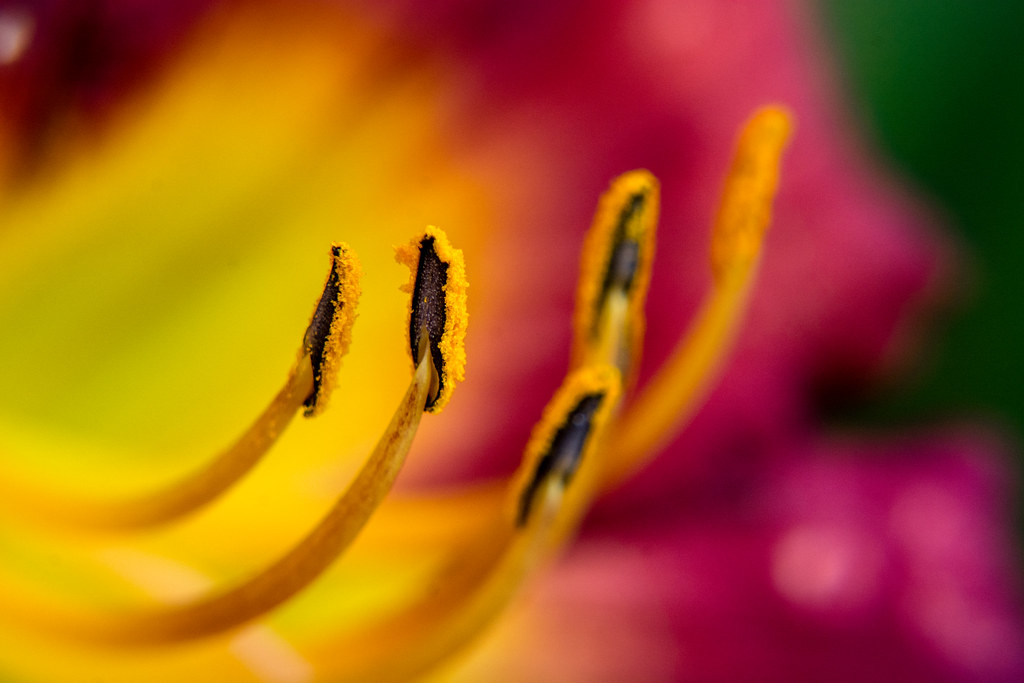
Alright, here you have it. This photo right here…this is the reason I bought a set of close-up filters. Every time I have seen a shot like this over the past several years I have wanted to get one of my own, but never had the proper equipment to make it happen. Certainly any one of my cameras could get this shot, even my old D200, but there’s no way to get a picture like this without using some type of macro equipment. The subject is just too small, and taking a picture with a normal lens and cropping it in post does not at all yield the same results as simply getting very close to the subject. However after getting my close-up filters and trying a few experiments I knew a shot like this was possible, which then meant I had to find a way to make it actually happen.

What you are seeing here are the anthers at the end of the filaments on a flower. (It’s some kind of lily, I think, though I’m not certain.) I found this, as I do so many of my Weekly Fifty pictures, on the campus of Oklahoma State University as I was out running an errand one day in late May. I figured we must have had some flowers on campus that would allow for this type of image but for a few weeks I had been mostly unsuccessful in locating any, until I cam across this one near the south side of our student union. There was a bit of a breeze so it made focusing a little tricky, and I ended up mostly just moving myself forward and backward as I snapped the shutter in order to get the picture I was hoping for. Even at f/8 I knew the depth of field would be so shallow as to be almost uncontrollable, and autofocus wasn’t helping much because of the way close-up filters degrade its accuracy along with the light wind causing its own set of problems.

I kept at it though, and after shooting the flower from one side I scooted over and tried a different angle while finally resulted in the image you see here. I hope I’m not being conceited when I say how pleased I am with the picture and the way it turned out–it’s not often that an image comes across exactly how I picture it in my mind, but that’s precisely what happened in this particular instance. I like the clear, distinct color palette and the sharpness of the foremost anther, and I like how you can clearly see a context for the subject too. Going much wider on the aperture would have resulted in a depth of field that would have likely obscured too many background elements and made it well-nigh impossible to get the one single anther in focus anyway.

I’m excited to keep using these filters and maybe one day get my hands on a true macro lens to play with too. It sure would be fun :)
Read my educational photography articles at Digital Photography School

Leaf-Footed Tree Bug

July 13, 2016 6 Comments

Mesquitehttps://www.weeklyfifty.com/wp-content/uploads/2016/05/WeeklyFifty2016July13LeafFootedTreeBug.mp3

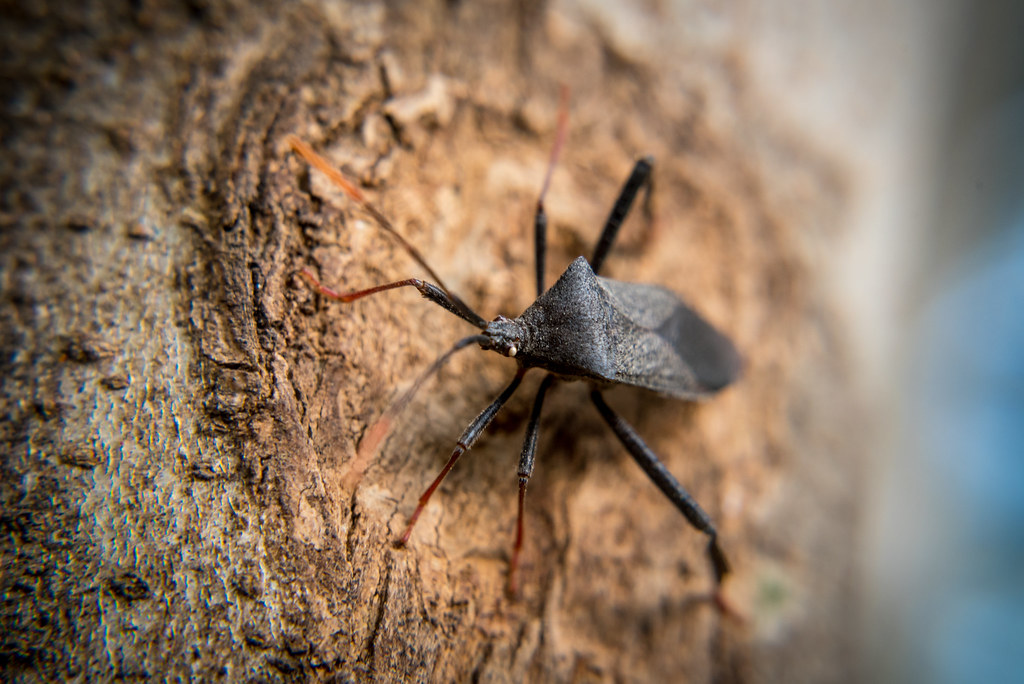
Here we have what I believe to be a giant mesquite bug, though I would gladly welcome corrections from any eagle-eyed entomologists who happen to be reading today’s post. a leaf-footed tree bug (acanthocephala terminalis), which I was able to identify with the help of some very nice strangers on Facebook :) This is another result of my continual experiments with close-up filters (see last week’s post for more details) and the more I use these little lens attachments the more I like them. And, the more I can hardly believe the results I am getting for such a cheap price.

One thing that has always fascinated me about macro photography is its ability to capture bugs and insects with incredible detail–often of the sort that is hidden from normal human eyes. It is something I have tried from time to time with my lenses but thanks to a rather weak maximum magnification it has mostly eluded me. Even with the close-up filters I am still having a lot of trouble because they require you to be very close to your subject–a situation that a telephoto macro lens like Nikon’s 105mm f/2.8 beast would be able to handle much better simply because it could be positioned farther away and focus across a much wider range as opposed to only being able to focus up close. However when I was playing with my kids in the backyard recently we came across several of these bugs crawling on a fence and since they don’t generally move all that quickly I thought it would be an ideal situation for playing around with some close-up shots.

At the time I did not have my camera with me but after dinner the three of us went back out and, with our glimpses peeled, soon spotted the small herd of six-legged friends which had by then migrated from the fence to a tree. We spent about ten or fifteen minutes moving in and around the tree, the boys looking for bugs while daddy rushed in to get some pictures, and soon discovered that while these insects don’t move very fast they do have a tendency to fly away at inconvenient times such as when a big ol’ Nikon DSLR is hovering about an inch and a half away. Out of 17 shots this was the only one that turned out, and even this one isn’t as good as it could be because the eyes of the bug are just barely out of focus. If you click on the image and look at the high-rez version on Flickr you will see that the in-focus area, or depth of field, is just behind the head and not actually on the head itself.

A couple problems cause this sort of thing to happen:

• When dealing with close-up photography you have a super duper shallow depth of field even at smaller apertures. The depth of field here is less than 1/4 inch and I was shooting at f/8.

• When shooting with close-up filters the autofocus doesn’t work too well, and even when it does the image often comes out a bit soft.

• I have learned that for close-up shots like this one it’s best to focus manually (yay for back-button focus!) which, combined with a moving subject and jittery photographer, make nailing focus even more tricky.

Still, overall I am very pleased with this shot and continue to be blown away at how effective these close-up filters are. I shot this with a +10 and +2 combined together, and even with all that extra glass jammed on front of my lens I am amazed at how sharp the final images can be. Is it as good as a dedicated macro lens? Not at all. But it’s also way cheaper, which goes a long way with me :)

Read my educational photography articles at Digital Photography School

Fossil

July 6, 2016 12 Comments

Fossilhttps://www.weeklyfifty.com/wp-content/uploads/2016/05/WeeklyFifty2016July6Fossil.mp3

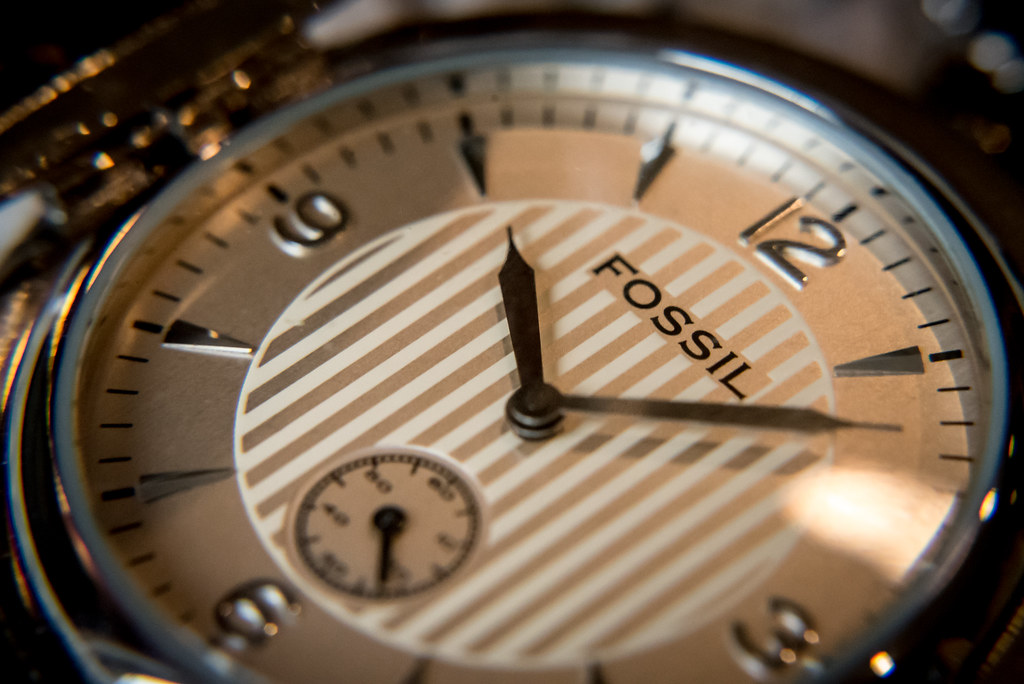
This week’s photo is a bit different from most of the pictures I have posted here on Weekly Fifty over the years. It’s the result of some experimenting I have been doing lately with a set of close-up filters. These, to be precise. Ever since my cousin Beth got an Olloclip which basically turned her iPhone into a macro photography machine I have wanted a similar solution for my DSLR. Unfortunately, actual macro lenses range in price from “Impractical” to “Not a chance” for most hobbyist photographers like myself, so until recently I basically found myself left out of the close-up photography party altogether. I had investigated various solutions like extension tubes and lens reversing rings, but they all seemed kind of expensive and more than a bit impractical for someone who just wants to play around with macro-style photography on occasion. I had heard of close-up filters before but never given them much thought until I realized that, for just about the cost of a pizza or two I could at least get something that would let me try this type of photography. If it worked, great! If not, no big deal. So I bought a set and kept my expectations low.

My goodness, were they ever exceeded. By a very long shot.

I explain more about what close-up filters do and how they work in an article I recently published on Digital Photography School, but the gist of it is they let you use any regular lens to focus on things that are super close. Super duper close, to be honest. The pocket watch you see above is about the size of a silver dollar in real life, but it filled the entire frame of the picture thanks to a +10 filter that I attached to my 50mm lens. It’s kind of unreal how well these little screw-on filters work for taking non-professional good-enough macro shots, and after using them for a while now I can confidently recommend them to anyone who is looking for something new and fun to try.*

On a side note, this watch was the one I wore when my wife and I got married just over ten years ago which is one reason I’m using it as this week’s picture. It’s sort of a commemoration, if you will. My three brothers served as my groomsmen and we all had identical pocket watches, and even though I don’t exactly wear mine on a regular basis I like to take it out from time and reflect on that special day. Of course I have plenty of other tangible reminders of my wedding day around me constantly, but it’s fun to get out special objects, totems, and trinkets like this from time to time (har!) as they help conjure up fond moments from days gone by in a unique way. It sure has been an incredible decade, and if my wife is reading this, I love you and our two little boys so very much. Thank you for being my beautiful bride, and here’s to many many more years of being your hubsand :)

*If you do want to purchase some filters, make sure they fit your lens. Check the thread diameter on your lens first, which will likely be something like 52mm or 58mm, and then get filters that will fit that size.

Read my educational photography articles at Digital Photography School

Royal

June 29, 2016 10 Comments

Royalhttps://www.weeklyfifty.com/wp-content/uploads/2016/05/WeeklyFifty2016June29Royal.mp3

I remember banging away at my mom’s typewriter when I was a kid, and yes I did say typewriter and not computer. She had one that we would haul out of the closet from time to time, plug in to the wall, and use to type letters or just play with kind of as an expensive source of amusement. This was in the late 1980’s before most homes had a computer and even though her typewriter did need to be plugged in it was merely so the physical action of pressing a key would then trigger a small motor that would activate the individual mechanical lever for the corresponding type hammer. This thing had no screen, no mouse, and used a physical ink ribbon that had to be refilled if letters started appearing as light gray. It wasn’t the most efficient way to get things done, and we always kept a small bottle of White-Out handy when using it, but without a computer screen we didn’t know any different at the time and it was a pretty useful and practical way to engage in written communication.

Of course my mom’s typewriter was far more modern than the one in this picture, and far more functional as well given that this one has some sort of plant growing out the top, but seeing this Royal model and taking its picture did bring me back a few years to what I guess you could say was a much simpler time. When I took this photo my wife and I had just eaten lunch at a local diner called Granny’s (kind of appropriate, I suppose, given the subject of the picture) and were on our way back to the car when I saw this collection of old household items sitting outside a store called The Nook. Something about the colors really stood out to me, and I thought about trying something a bit different and taking a shot straight on instead of with my usual foreground/background composition, but there were too many cars parked in the way and my 50mm lens was not wide enough to get that kind of a picture. So I went with what works and I’m pretty happy with how things turned out.

I shot this with my D750 which enabled me to get a bit more foreground and background blur than would have been possible on my D7100 due to the sensor size (if I was trying to shoot the exact same composition, that is) and really like the mix of colors that I was able to get in the final shot. This was taken at f/1.8 and even though I had to stand pretty far back to get everything I wanted in the shot, there depth of field is still quite shallow. Yay for full-frame cameras! :)

Clearly the typewriter is the subject of the scene but you can see a lot of interesting things going on in the background too, and the typewriter just happened to be perfectly positioned so as to enable a picture like this with its features neatly on display while also offering a bit of deference to the background objects too. When I was editing the RAW file in Lightroom I actually desaturated things just a bit which is contrary to my normal style of postprocessing, but I thought it was appropriate given the old-fashioned nature of the image itself. I think it would be cool to revisit this scene in the near future, perhaps in the morning or evening when the type of daylight and background traffic would allow for a much different type of picture. And who knows, maybe in the meantime it would be fun to track down an old typewriter and see if my kids can play around with it too :)

Read my educational photography articles at Digital Photography School

In Hiding

June 22, 2016 6 Comments

In Hidinghttps://www.weeklyfifty.com/wp-content/uploads/2016/06/WeeklyFifty2016June22InHiding.mp3

The story behind this photo is a bit strange, and it all begins with a shopping cart and a bicycle. On most days I like to ride my bike to work, especially now that the weather is so much warmer and it’s not raining as much. It’s only three miles from my house to my office which means it takes about 15 minutes on two wheels which is not much longer than it takes to get there on four. I also get a bit of exercise in the process, which I use to justify the rather copious amounts of Mt. Dew that I usually drink when I arrive at work. There’s a bridge that crosses a small creek at the halfway point in my bike ride and a few days before this picture was taken I saw something a bit strange as I crossed the stream. (And yes I know this is something you should never do.) Below me in the bushes I spied, with my little eye, a shopping cart:

DSC_5932
No, this should not be here. But I’m kind of impressed that it is.

I believe this was a Tuesday or Wednesday, and at the time I thought it would for kind of an interesting picture but didn’t want to be late for work so I just kept on biking. On Friday I saw that the cart was still there, so I hopped off my bike and went down to see if I could use this in any way to create an interesting picture. I tried a couple different angles and it just wasn’t working out, mostly because the greenery around the cart was so thick that you couldn’t really see the cart itself in most of the pictures. I also realized that when I was on the grassy ridge it was difficult to get a sense of place and context, which made the picture of a yellow shopping cart a little too mundane and boring. I really wanted to take advantage of the setting and the early morning light, so I searched around a bit to see if anything stood out to me and that’s when I saw the dark red piece of grass that ended up being the subject for this week’s picture.

If you look close the grass is barely attached to the main stalk. I think it has turned red as part of the dying process, and my guess is that it will soon become brown and fall off. The richness of the color kind of took me off guard, and when I got down low to photograph it I noticed something in the background I could use as a little extra compositional bonus: the yellow shopping cart :) If you look near the top left corner you will see a faint yellow stripe which is the top of the cart, and though it was not entirely intentional I thought it added a fun extra bit to the image overall.

It’s weird how many times I have biked over that stream on the way to work but never taken 30 seconds to stop for a photo. Now I wonder what else there is on my 15-minute early morning bike ride that might make for an interesting picture as well. Hmm…

Read my educational photography articles at Digital Photography School

  • « Go to Previous Page
  • Page 1
  • Interim pages omitted …
  • Page 109
  • Page 110
  • Page 111
  • Page 112
  • Page 113
  • Interim pages omitted …
  • Page 146
  • Go to Next Page »

Copyright © 2026 Creative Commons License
This work is licensed under a Creative Commons Attribution-NonCommercial-NoDerivs 3.0 Unported License.