• Skip to main content

Weekly Fifty

Exploring the wonders of creation through a 50mm lens...and other lenses too.

  • Subscribe
  • YouTube
  • About

Outdoor Classroom

February 27, 2019 Leave a Comment

FUJI4349.jpg

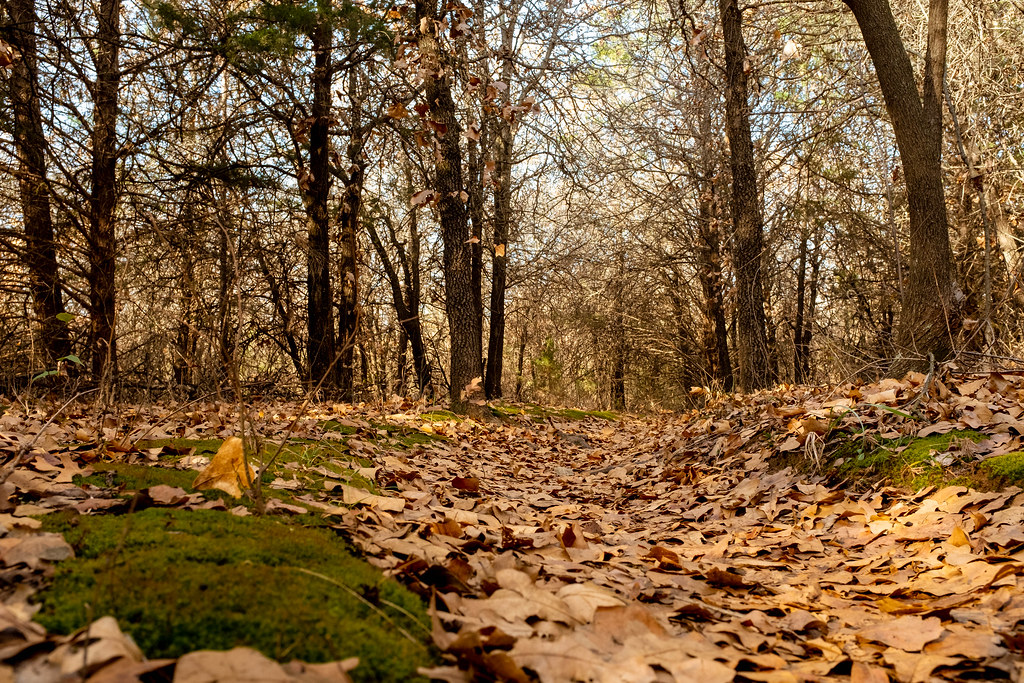
In some ways this picture reminded me of one I shared a few weeks ago from Arcadia Lake, and certainly the composition is quite similar in a lot of ways. Like that one, this was shot with my Fuji X100F from the ground looking up at the sky through a forest of bare trees. The foreground dominates the frame with a bit of a green patch on the left, the horizon lines are roughly equal, and both images were taken at a lake. Suffice it to say the first image was certainly on my mind when I shot this one, and that’s one of the fun things about photography: learning from your earlier shots and letting them inform your approach to subsequent pictures.

What might not seem obvious when looking at this one is that the setting is, in fact, vastly different. Instead of a huge lake at a state park, this one was taken at an outdoor classroom on the southwest side of town. The lake in this image is actually just on the other side of the patch of trees and it’s…oh, about maybe a quarter of an acre in size. You’d never know it from looking at the picture though, and what you also don’t see is the middle school just out of frame as well as the elementary school behind me. Nothing has been photoshopped here, just cleverly hidden thanks to how I composed the shot.

So what happened was, my wife and I took our boys to this spot on a chilly Saturday afternoon in late January when we needed to get them out of the house for a little while. The park we usually go to was kind of a non-starter since we had just been there a few days prior and the kids tend to do better with a change of scenery, so we went here and basically just let them wander around on the dirt paths for an hour and a half. They vacillated between throwing sticks into the water and finding out where various trails went, and even though their pants and shoes were much more muddy than we anticipated a great time was had by all and we left feeling like we had done something useful with the time. Not life-changing or earth-shattering, but hopefully better than sitting inside all day :)

Read my educational photography articles at Digital Photography School

Skylight

February 20, 2019 5 Comments

Skylight

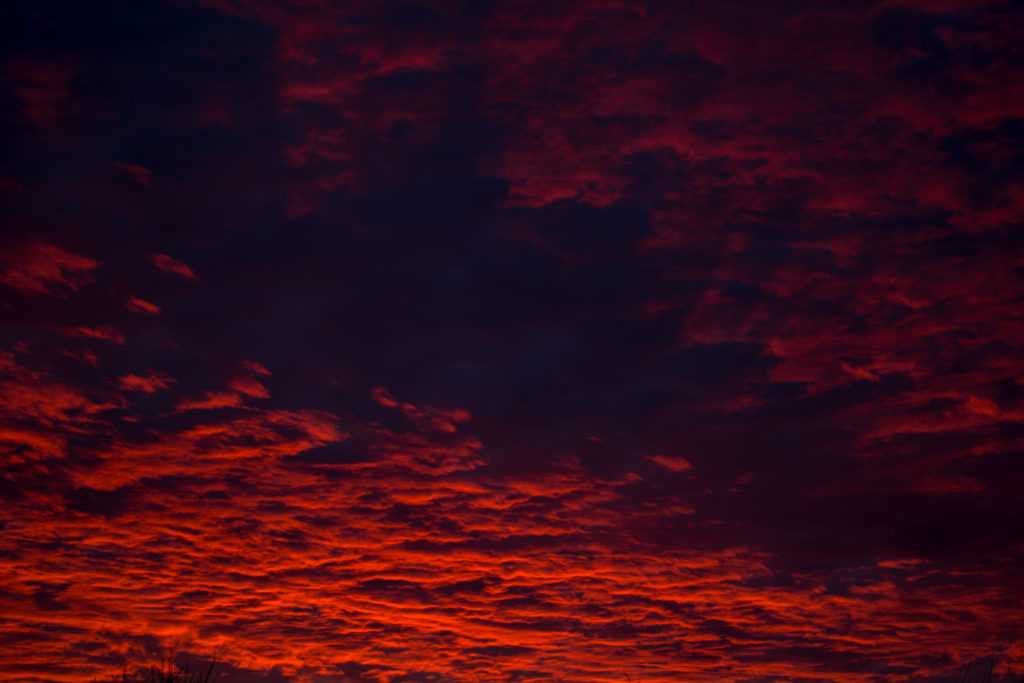
I promise this wasn’t processed through some type of Instagram-style photo filter. The sky really did look like this on the morning of January 10, 2019. When I pulled out of my driveway on my bike I could see that the sunrise was, for whatever atmospheric reasons cause these sorts of conditions, going to be especially rich and beautiful. As I rode past the vacant lot just south of my house I paused to take a few shots but they didn’t really do a great job of capturing the scene, especially with my D7100 and 50mm lens. So on I went until I got to the parking lot behind Hobby Lobby with an empty tree-filled field just to the southwest. I looked behind me to the east and it looked like the sky was positively blazing.

The tricky thing about photographing sunrises and sunsets is that it’s almost impossible to get the vision in real life to translate to a digital facsimile. Colors are never as vivid, and vistas are never as scenic, as when you see them in person with your own two eyes. That doesn’t mean you shouldn’t try though, and even though I only had my 50mm lens I figured I would do what I could to make the most of the situation. I shot a couple images with trees in the foreground but then realized that eliminating them altogether might result in a more interesting image, even though a picture of the sky alone kind of removes the possibility of context. And you know how much I emphasize context… :)

To capture the richness of the colors I underesposed the image by two full stops, and here’s what the RAW file looked like as a result:

Even in this picture the clouds are such a deep red that it’s almost difficult to believe unless you saw it with your own eyes. I didn’t want to lose those colors but I did want to punch up the sky just a bit to make the final image more accurately represent what I actually saw. I promise I didn’t adjust the saturation levels at all, and most of the editing was just adjusting the brightness of the dark areas as well as a bit of cropping on the bottom.

A few minutes later, as I turned to look behind me while waiting for a stoplight to change from red to green, I saw that the scene was almost entirely gone. Instead of a rich amber glow the sky was now a much more normal shade of blue and orange, wholly unremarkable. It’s amazing how quickly some photographic moments pass, and I’m glad I was able to capture just a bit of this one while I had the chance.

Read my educational photography articles at Digital Photography School

Optimist

February 13, 2019 Leave a Comment

FUJI3027.jpg

This was a fun picture to take partially because of the bit of challenge it presented, but also because it was just a really enjoyable day to be out at the lake with my camera. As my wife and I were walking around the lake here in town while our boys rode their bikes, I paused a few times to get some pictures just like this with various brown plants and leaves as subjects. The weather conditions were kind of unique in that there was virtually no detectable wind whatsoever, and no clouds in the sky, combined with temps in the 40’s or 50’s which made for really fun photo conditions. On the south side of the lake I got a couple shots like this but with grass instead of…whatever this thing is…and while they worked out OK the lighting wasn’t that great and the subjects were a bit unclear. I was shooting with my Fuji X100F so it was difficult to isolate my subject in the frame, but when we got to the south side of the lake and came across this scene I realized that it was just what I was looking for.

I knew I wanted this withered flower to be right in the center of the shot as opposed to on either side, but two big questions ran through my mind:

  1. What aperture should I use?
  2. Where should I place the horizon?

I really wanted the background to be blurred out but nevertheless discernible, but I wanted the subject to be nice and sharp as well. Shooting subjects close-up at f/2 is not exactly the X100F’s forte because that lens gets pretty soft in those specific conditions. F/4 didn’t quite give me the background blur I was aiming for, so I settled on f/2.8 even though the subject is a bit fuzzy around the edges. It’s a compromise I’m quite happy with.

As for the horizon, I wasn’t really sure what to do so I shot several different versions of this picture. Some were like this, some had the ball (or whatever you want to call it) right in the middle of the horizon, and some had it much lower. I ended up liking this one the best but not for any specific reason that I can articulate. It just looks the most interesting to me. I really liked that the lack of wind resulted in a glassy smooth lake surface, and even though this picture is awash with blue tones I hope it feels at least a little warm and inviting because that’s certainly how it felt on this particular day :)

Read my educational photography articles at Digital Photography School

Christmas Train

February 6, 2019 Leave a Comment

FUJI3128.jpg

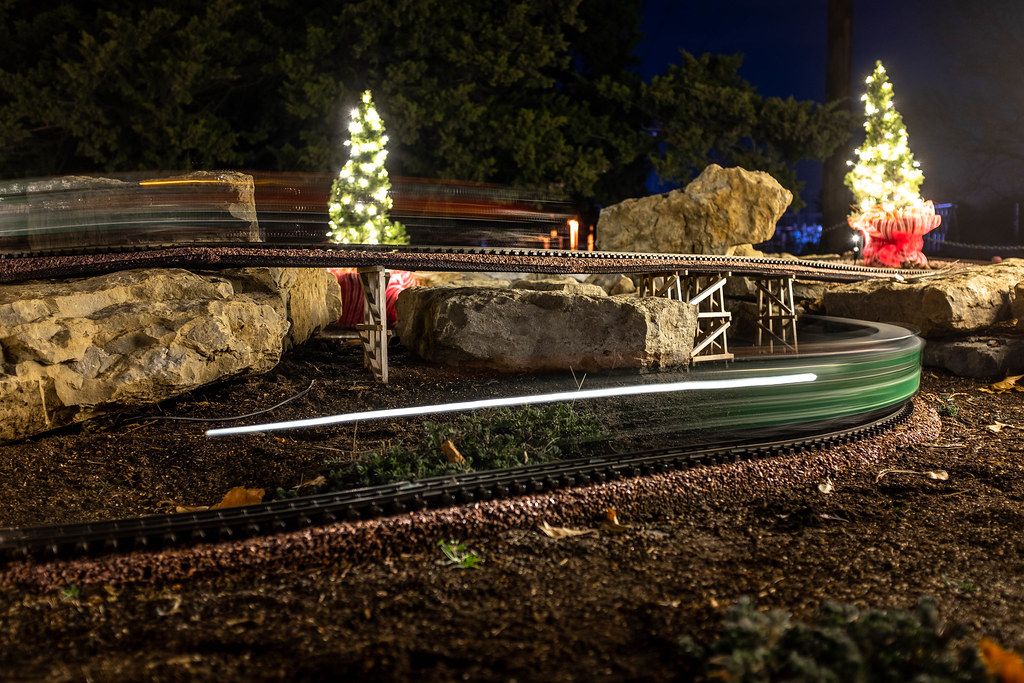
The local Botanic Garden here in Stillwater often has family events throughout the year, and one week before Christmas last year they invited the public to come out for snacks, crafts, and a bit of a bonfire as well. They recently installed a model train on the premises which runs a few times each month, and because we knew they would have it operating during their Christmas event I made sure to bring my Fuji X100F and little Gorillapod with so I could try a few long-exposure shots and see what happened.

I set up my camera and tripod on one side of the train display while our kids ran around looking at the lights and trying to keep up with the trains as they completed their circuits around the tracks. My goal was to catch the trains in motion but also have a shallow depth of field to create a sense of foreground and background, which meant I had to shoot at f/2.8 with an ISO value of 200. This left me with a 2.5-second shutter speed in order to get the right exposure, though in hindsight I could have activated the built-in ND filter and gotten about seven seconds or possibly even more. I manually focused on the rocks because I wanted them to be nice and sharp, and I wasn’t too worried about the trains not being super well focused because I knew they would end up looking like blurry streaks anyway.

After getting one or two shots that I wasn’t quite happy with, I realized that I could use the burst mode on my camera to get five photos in succession and then just pick the one I liked the most. This resulted in several mediocre images but a couple ones that I really like, especially the one posted here. I always like the sense of motion that light trails give a shot, and it was neat to hear my oldest son ask me how I got the trains to move so fast. In reality they were chugging along kind of slow, but the motion trails here make them look like some kind of supersonic bullet trains.

After spending just a few minutes here I put the camera away and joined my wife and my boys at the hot chocolate station where we also met up with some friends who happened to be at the same event. It was a clear starry sky on a crisp December night, and having this photo is a nice way to remember it all.

Read my educational photography articles at Digital Photography School

Arcadia

January 30, 2019 Leave a Comment

FUJI2987.jpg

To those of you who shoot film…I salute you.

I took this photo this when my wife and I were on a walk at Arcadia Lake just northeast of Oklahoma City, and as I knelt down on this leaf-strewn path I thought about my buddy Ryan who has taken some absolutely breathtaking images similar to this, but with a lot more mountains and water, using nothing but a light meter, some math, and a film camera. I had no such tools at my disposal and instead went with a decidedly modern approach: I shot this with my Fuji X100F which, despite looking kind of like an old-school film camera, is all ones and zeros on the inside. And as such I let the camera take care of all the heavy lifting. I was using Auto ISO with a minimum shutter of 1/125 and shot the first version of this at f/4 which, thanks to the ability to see the final image on the LCD screen on the back of the camera, I realized had a depth-of-field that was much too shallow. So I dialed in an aperture of f/8, focused on the tree  halfway down the path, and took the shot you see here.

Then when I got back to my computer I used Lightroom to edit the RAW file to my taste. The entire process was digital from start to finish, and while I’m certainly happy with the results I wonder what I would think if had shot this on film. Even something as simple as nailing the exposure would have been difficult because of the mix of highlights and shadows, and I almost certainly wouldn’t have gotten the composition to look how I wanted with the green mossy rock slightly out of focus in the foreground and horizon neatly bisecting the image just above the lower third.

Film shooters…you have a tricky job and I appreciate the work that goes into capturing images without a digital safety net.

Read my educational photography articles at Digital Photography School

  • « Go to Previous Page
  • Page 1
  • Interim pages omitted …
  • Page 72
  • Page 73
  • Page 74
  • Page 75
  • Page 76
  • Interim pages omitted …
  • Page 137
  • Go to Next Page »

Copyright © 2025 Creative Commons License
This work is licensed under a Creative Commons Attribution-NonCommercial-NoDerivs 3.0 Unported License.